All Football
Get the app
Goal: Portugal can find a new scorer, but replicating Cristiano Ronaldo's influence is nearly impossible
Source: Goal (Mark Doyle)
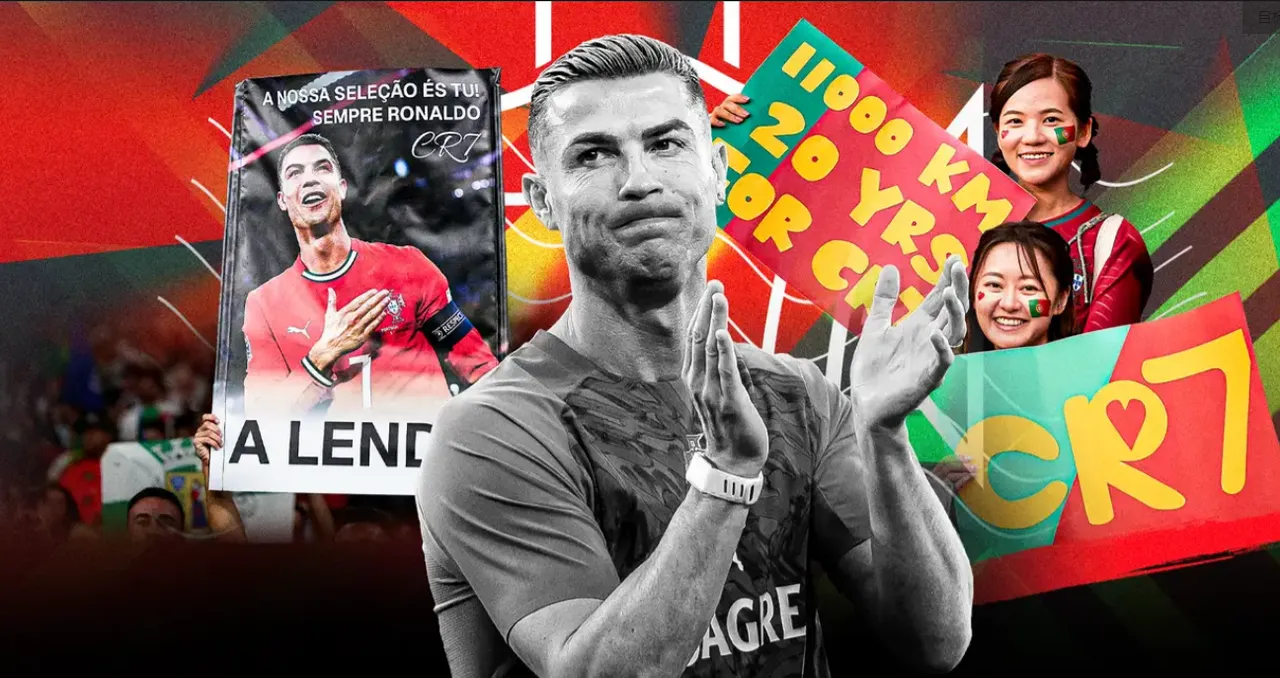
Cristiano Ronaldo ultimately parted ways with the Portugal national team on bad terms. For Portugal, the sporting void can be filled, but the commercial, brand, and global traffic void is almost impossible to replace, which is the core point of the original author.
Ronaldo's goalscoring and finishing ability are historically elite, but in the later stages of his career, his mobility declined, his contribution to pressing and overall movement was limited, and he took up space from Portugal's young attackers. Gonçalo Ramos is the most direct successor at this stage. His hat-trick against Switzerland at the 2022 World Cup proved he can lead the line; recently he scored against Denmark and Norway, with 4 goals in his last 5 national team games, showing consistent form.
He can provide the running, interchanging, and link-up play required of a modern striker, fitting Portugal's excellent wingers and midfielders.
The article defines Ronaldo's departure as a commercial tragedy for the Portuguese Football Federation, rooted in the 'Ronaldo effect': he is a massive global brand independent of the Portugal national team. Many young fans follow the star, not the national team. Ronaldo covers a huge fan base in Asia and North America, is the core international promotional asset of the Portugal national team, and is the biggest bargaining chip for the federation in sponsorship negotiations, commercial partnerships, overseas broadcasting, and commercial events. Some evaluations bluntly state: his global influence even exceeds that of the Portugal national team itself.
Past cases confirm he can directly drive commercial revenue. When Juventus signed Ronaldo, their social media following increased by 2.2 million in 24 hours; subsequently they secured sponsorship contracts with extremely high premiums, and shirt and main sponsor amounts rose significantly. Wherever Ronaldo goes, traffic, exposure, and commercial negotiation leverage follow. The Portuguese Football Federation has relied on his personal appeal for many overseas commercial contracts over the past two decades. Currently, no one in Portugal has Ronaldo's cross-sector, cross-continental top-tier status. Losing him means the national team's media exposure and commercial attractiveness will decline significantly, sponsorship negotiation power will decrease, and commercial revenue will shrink.
Ronaldo originally planned to retire from the national team after the World Cup, but federation president Proença persuaded him to stay, largely because of his commercial value.
Later, a conflict erupted with coach Jorge Jesus: Ronaldo believed the coach violated an agreement on playing time and accused the coach of arrogance; Jesus insisted on rotation based on match form and would not make special arrangements for him. This conflict ultimately pushed Ronaldo to leave the national team.
Even though his sporting form was no longer suitable for starting, the federation was still reluctant to give up the commercial value behind him, which is also the key reason why a dignified handover could not be completed. Summary
The above is the original author's view. Let me share my thoughts:
First, it is undeniable that as Ronaldo ages, his sporting form is gradually declining. We cannot evaluate a 41-year-old by his performances at 25! Portugal will definitely have excellent forwards in the future, and Ronaldo himself certainly hopes the national team gets better and better, but the author's claim that Gonçalo Ramos can carry Portugal's attack is a bit ridiculous. I hope Ramos can prove me wrong in the future!
As for off-field influence, few countries can produce another global sports icon like Ronaldo, a phenomenon that transcends cultures.