All Football
Get the app
Mail: Despite tears on departure, Pochettino never truly embraced the USA
Live StreamsLive scoresTV GuideTop picksOdds
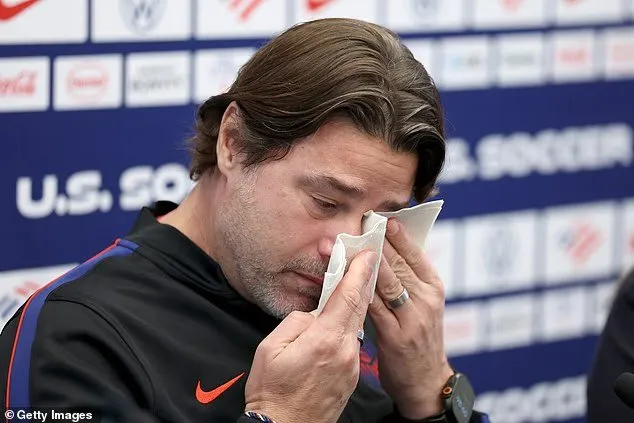
A Mail column reports that calling the tears on Mauricio Pochettino's face "performative" may be extremely harsh, even excessive. But that is the first word that came to this reporter's mind, followed by "surprising" and "a bit over the top."
Just four months ago, the Argentine, who has led the US men's national team since 2024, had signed a contract extension to stay for another four years.
"We want to try to leave a lasting impact on the footballing level in this country that has welcomed us so warmly, and we hope that impact goes beyond results on the pitch," Pochettino said at the signing.
Yet, a few months and one international window later, this attempt to leave a "lasting impact" is over. Pochettino may have cried because he fell in love with the country, but that does not mean he was sacked. Instead, he will take charge of one of the world's greatest football brands, Manchester United.
Now, the question turns to Pochettino's legacy. Many American football journalists and fans have mentioned that the former Chelsea manager instilled a fighting spirit and helped a team that had been dull under its previous coach regain its energy.
But Pochettino's results cannot be called successful. Compared with other coaches in the same period, the USA's World Cup performance was not outstanding; against the strong teams the USA faced, his record was poor. He also leaves as the first full-time head coach in nearly 30 years to fail to win at least one trophy with the US men's national team. By all accounts, the best thing Pochettino did was to instill a culture of hunger and backs-to-the-wall mentality in a team dragged down by a scandal that shook the nation and a disastrous 2024 Copa America.
But in doing so, he often left behind the most important players in the US men's national team system. Instead of maintaining a stable core squad, he seemed to experiment anew every international window.
The results reflected this instability. Before the World Cup, Pochettino played 12 matches against teams ranked in the top 30 in the world, winning only 3, drawing 1, and losing the other 8.
Meanwhile, rumors kept swirling that he would return to Europe. Pochettino may have said at his departure press conference, "I never said I wanted to return to the Premier League," but the Premier League clearly wanted him, especially Tottenham Hotspur.
By the time of the World Cup, Pochettino's team finally began to gel into a coherent style, playing a dazzling brand of football never seen before from the US men's national team.
But after the round of 32 match against Bosnia and Herzegovina, everything collapsed. Folarin Balogun's red card was cunningly rescinded—Americans have to admit that. The off-field noise and controversy ultimately led to the USA being humiliated at home by Belgium.
No one expected the USA to go far, at most the round of 16. But calling Pochettino's tenure with the US men's national team a "success" based solely on this World Cup performance is giving him too much credit, especially considering that the previous four coaches who led the USA to the World Cup all achieved at least the same result.
With his departure confirmed, Pochettino becomes the first US men's national team head coach since Steve Sampson in 1998 to leave without winning any trophy. Sampson was not even a professional coach when he was appointed.
Despite the lack of results, players have praised Pochettino's leadership and development skills, and that should not be overlooked.
Middlesbrough midfielder Sebastian Berhalter said: "He means a lot to me, he helped me grow as a player and as a person. As a player, that's all you can ask for—to be trusted and to be recognized."
But not every player in the US system was eager to play under Pochettino. Look at Christian Pulisic, who rested all summer in 2025 to prepare for the World Cup, only to end up with a blank slate in his own country.
That said, there is still hope for the future. After Pochettino signed his extension, there was an opportunity to build on his work ethic, team culture, and leadership.
With that contract extension, Pochettino had the chance to lay a foundation in the American football system and pave the way for decades of success.
Now, all of that is gone. Today, Pochettino will be remembered more for unfulfilled potential than for changing the team culture. After all, if the main architect of that culture leaves, how can you expect it to continue?
American football now faces a dilemma: either bring in another big-name coach (if you believe the rumors, possibly Pep Guardiola) or find someone who will treat this job as a cornerstone rather than a stepping stone.
Despite the tears on Friday, Pochettino never seemed to truly embrace the USA. He will now head to Old Trafford to manage a Manchester United side long shrouded in disappointment, leaving behind one of the biggest "what ifs" in the still-growing American football landscape.