All Football
Get the app
Andrea Conti: My retirement was well thought out; playing for Milan fulfilled a childhood dream
Andrea Conti's Rossoneri career began in the summer of the Marco Fassone era's 'formalism', but unfortunately, his playing days were plagued by a series of injuries, leading to his retirement at the age of 31. In a recent interview with Fanpage, the former full-back opened up about his entire career: the injuries, his time at Milan, the difficulties of returning to the pitch, and his new journey as a youth coach at Scanzorosciate in the province of Bergamo.
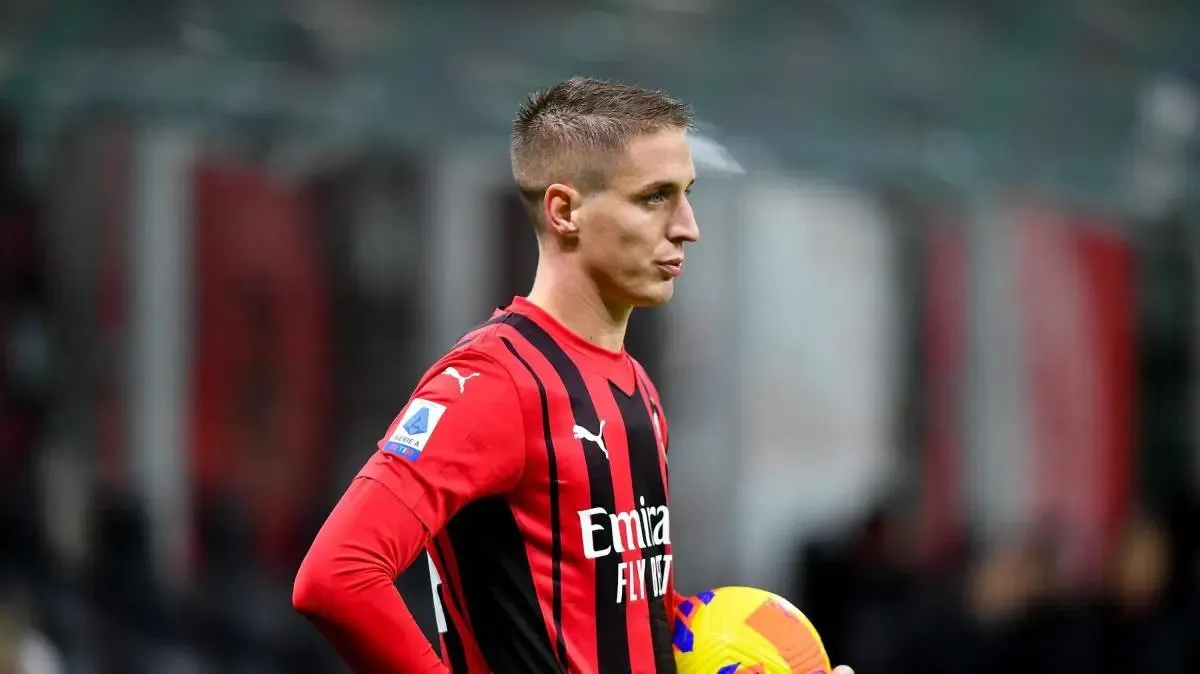
Andrea, let's start with the present. You have closed an important chapter of your life and chosen to retire. How do you feel personally right now?
"To be honest, I feel good. I had been processing this for a long time, because when I made the decision, I already knew very well what I was going to do. The last two and a half years of my career, when I was at Sampdoria, were not good at all, both physically and mentally as a result. Back then, the idea was already in my mind. Later, after my contract ended, I told myself that if an opportunity came along that really attracted me, I might continue playing. But even if I didn't find anything, I wouldn't have any regrets. So when I made the final decision, I had already thought about it for a long time."
So, was this mainly a decision made after careful consideration?
"Yes. Because physically you might feel you can still contribute, even in lower divisions, but if your mind tells you something else, it's right to listen to your heart. I also decided to retire because, honestly, I didn't want to play in the lower leagues anymore. I could have done that, but it wasn't what I wanted."
Now you are starting over with the youth team at Scanzorosciate. How did this new adventure begin?
"The fundamental desire was to continue working in football as a coach. My dream is to become a real coach one day, maybe even managing a Serie A team. But as a starting point, I really enjoy working with young players. I took the coaching licence course and obtained my qualification. I also chose Scanzorosciate because my son plays there. I live nearby and sent him to this club, which is well-known locally. After professional clubs like Atalanta and AlbinoLeffe, Scanzorosciate is one of the most important football clubs in the area. The head of the youth sector, Tino Russo, asked me last year if I would like to help out. But at that time I wasn't mentally ready, and I didn't want to take on a commitment I might not be able to take seriously. When I make a commitment, I want to do things properly. This year, after getting my licence, the opportunity came up again, and I decided to accept and start getting back on track."
Let's go back to Conti as a player. At Atalanta, you shone under Gian Piero Gasperini. How gruelling were his training sessions?
"My breakthrough was mainly thanks to Gasperini. He knew how to bring out my value, just as he has done with many other young players over the years, getting the best out of us. I think he is very good at developing young players. He came through the youth system and knows how to deal with youngsters, how to structure their training, and how to get the best level out of them. It's a demanding work method because he makes you train heavily both technically and physically. The intensity is really high, especially during pre-season and the first few days of the week. Then, as the match approaches, the intensity drops because you have to be at your best on Sunday."
In 2017, both Milan and Chelsea approached you. In hindsight, have you ever reconsidered that choice?
"No, not at all. It's always easy to be wise after the event, but it's not something I regret. I was in one of the most important environments in Europe and the world, like Milan. My view is that what happened to me would have happened wherever I went. It's not as if I wouldn't have gotten injured if I had gone somewhere else. In fact, for me, being able to play for a team like Milan fulfilled my childhood dream. Every child dreams of playing for big clubs, especially the Italian giants. I will always be grateful for the opportunity I had."
Just a few days after being called up to the national team, you suffered your first serious injury. How big an impact did that moment have on you?
"If I could erase one day from my career, I would definitely erase the training session where I got injured for the first time. I think my career downturn started from that moment. That day I was already training in poor physical condition because I wasn't feeling very well. If I could erase one day, it would definitely be that one."
Have you ever thought that if a different medical approach had been taken, your career might have changed?
"That will always be my regret. I always think: 'What would have happened if everything had gone well the first time?' But you have to make peace with yourself and tell yourself that what happened, happened. You can't turn back time. I did everything I could to stay in the best possible condition. So from that perspective, my conscience is clear. Of course, occasionally I still think: 'Ah, if things had been different back then, maybe today I wouldn't be at home taking coaching courses, maybe I'd still be playing.'"
At a certain point, you were even labelled an 'injury-prone player'. How much pressure did that label put on you?
"Up to a certain stage. At first, maybe you care a little, but later it becomes unimportant and you don't think about it anymore. Being given those labels is also very normal. There are many players who have suffered a lot of injuries in their careers and are defined as fragile. It's part of the game. It's normal for journalists to see a player constantly getting injured and label him fragile. How can you blame them? It's all part of the profession."
Later, you had a season as a starter and were in good form, but then under Stefano Pioli you were sidelined. How do you view that situation?
"It wasn't easy. In 2020, in the season after the COVID-19 pandemic, I played regularly. Then I got injured, had surgery, and was out for a few months. Since I came back, I never played again and was somewhat sidelined. I don't know if it was the coach's choice, the club's, or something else. But going from a phase of playing to a phase of being almost invisible is not easy. Maybe many onlookers think: 'You're a footballer, you earn a lot of money, playing or not makes no difference.' But I can assure you that for 90% of players, the most important thing is to play, stay healthy, and be happy. To a certain extent, money becomes unimportant."
And your job is to play football.
"Exactly. If you don't work, the money doesn't come in. These situations are hard to deal with. Maybe you think: 'I'll leave and try somewhere else.' But where do you go? You went from being a fragile player to an invisible player. Who would sign you then? From the outside everything seems easy, but on the inside, the situation is complicated."
At Sampdoria you experienced other physical problems, including Haglund's syndrome. What exactly is that?
"Basically, a part of your heel isn't round, it's pointed. This pointed part rubs against the tendon, slowly damaging it. In my case, the tendon damage was caused precisely because the heel was pointed and kept hitting the tendon. Through surgery, I had to repair the damage and remove this pointed part of the heel, smoothing it down."
At Milan, you met Zlatan Ibrahimović again. You once mentioned that youth team players even cried because of his methods. Today, for the youngsters you described earlier, can leadership like Ibrahimović's still be sustained?
"I think for kids today, it's hard to take, but his way of doing things is precisely why he reached the level he did, and it completely reflects who he is. I am by no means against his approach. Quite the opposite. He is someone who motivates you and makes you always give your all. If you have a strong character, you can handle these things, and it might even push you to give more. But if you have a weaker character, you might find it harder to bear. However, Ibrahimović is a charismatic leader, a technical leader, someone who makes his presence felt. His career proves that this approach belongs to him."
How important was he to Milan's transformation into Serie A champions?
"He played an important role. In those two years, he was part of Milan's transformation. I wouldn't say the Scudetto wouldn't have arrived without him, but his role was undoubtedly significant. And you have to give him credit for one thing: off the pitch, he is a different person. He is very likeable, funny, someone you can joke with. On the pitch, though, he is demanding. But if you want to be a champion, you can't always be gentle."
Today you are on the other side. Now it's your turn to teach young players. What do you think is the most important advice you can give to a youngster who dreams of becoming a footballer?
"Believe in yourself completely. But believing alone isn't enough: you have to do everything you can to achieve that dream. You have to make sacrifices, be committed, and be willing to dedicate yourself. I'm not saying you have to give up everything, but you must be 100% focused on what you want to do."
And how do you avoid burning out too early?
"By taking the necessary steps for the stage you are at. If a player is ready to play in Serie C, he should play in Serie C without any problem. If he is ready for Serie B, it's right for him to play in Serie B. You have to go through the stages in the right way."
For example, do you think a very young player should have the courage to drop down a division to get consistent playing time?
"Yes. If a player is at a stage where he needs to play and grow, for me, a team where he can play 30-35 games is better than sitting on the bench in a higher division. The important thing is to understand what stage of your career you are at and take the right step at that time."
 Serie A standings
 Milan live stream & scores