All Football
Get the app
Guardiola: Munich was the best time for my whole family
Pep Guardiola began his first overseas managerial stint at Bayern. The Spanish coach holds fond memories of his time in Germany.
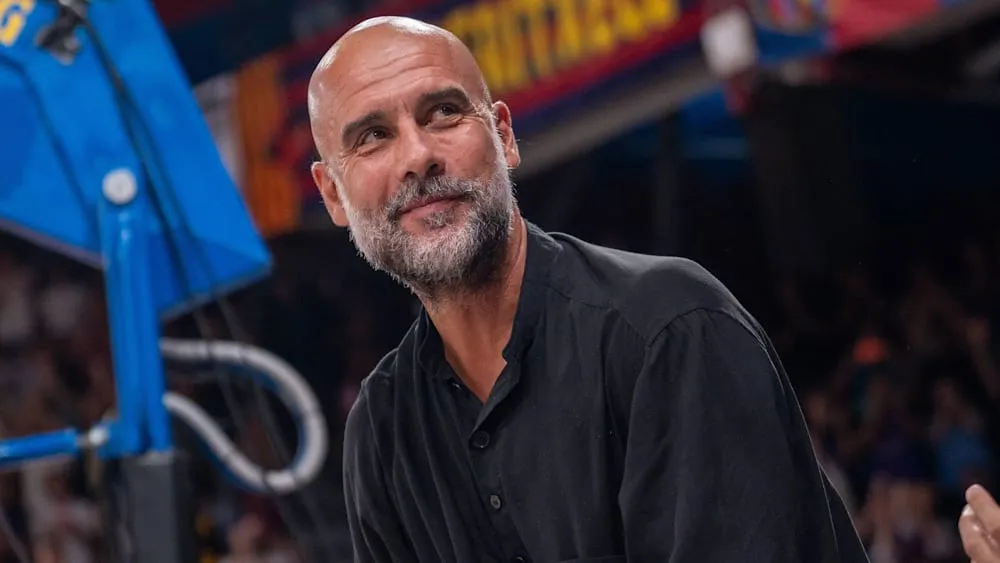
Intense body language on the touchline, meticulous tactical instructions, and a boundless passion that sometimes saw him scratching his head raw: Guardiola is undoubtedly missed by the football world—but is the feeling mutual? "Last time it took me a full year to recharge my batteries. This time I really don't know. I have to wait and see," the 55-year-old replied in an interview with the latest issue of Bundesliga Magazine when asked how long this sabbatical will last.
This summer, Guardiola left Man City, where he had coached for ten years, leading the team to one Champions League title and six league titles. Since then, he has "certainly become a bit calmer," as he "doesn't have to" think about his team and other obligations "every single moment." He feels that watching football has finally become "pure joy" again.
So, what does such a passionate coach do during a football sabbatical? "Nothing," Guardiola answered briefly. "And doing nothing is a lot in itself. But that's exactly what I wanted," he explained. "I can finally see my children, my family, and my friends more often, I play golf, and I read a lot. All those things I usually rarely have time for."
His newfound free time also allowed him to take a short trip to Munich, where this interview took place in mid-September. The Bavarian capital remains close to Guardiola's heart: "That time in Munich was the best time for our whole family. Our children were five, nine, and twelve years old back then. We were all together, whereas now they contact mum and dad via mobile phone or social media."
On the sporting side, Munich also holds special meaning for him, having celebrated three league titles and two domestic doubles there: "I found everything I dreamed of here back then. Bayern—this club always runs well, regardless of who the coach is, who the players are, or who the staff are. This club is outstanding," Guardiola praised.
Besides the atmosphere in German stadiums, the German "way of attacking and defending" also left a deep impression on him. Guardiola learned a lot from it back then and applied it to his future career: "Your mentality, your belief in yourselves, the clear way you express your opinions, and how little 'politics' you allow in football. Your respect for the fans and the fans' respect for the players. And a club like Bayern being grateful for everything I did. That moved me deeply."
Guardiola pointed out with a smile that, compared to the Premier League and La Liga, the charm of the Bundesliga is that you can be "completely off form" and yet suddenly "score three or four goals in ten or fifteen minutes" and win the match. He remarked: "You Germans have always been like that."
Although he still occasionally keeps in touch with Uli Hoeneß and Karl-Heinz Rummenigge, it seems unlikely he will return to Munich—just as a return to Barcelona is unlikely. "Never say never," Guardiola admitted, though he explained that "enthusiasm, passion, and a firm will to achieve in football" are more important than "experience."
As for his future in football, at least in September, he hadn't "thought about it" yet. However, he did not deny his dream at the time, which is "to experience a World Cup as a head coach one day."
In line with this, a few months later, US Soccer has reportedly identified the 55-year-old coach as the top candidate to succeed Mauricio Pochettino.

 but you can't blame Pep for that, blame Löw. Even if you want to complain, two or three years is enough—didn't expect Germany and Bayern fans to hold a grudge for over ten years
 👍 6


 👍 6