All Football
Get the app
Guardiola: Messi sets me apart from other coaches, great players make great managers
Romário TV has aired an exclusive interview with Pep Guardiola. The two former Barcelona teammates reunited in Salvador, Brazil, to reminisce about the "Dream Team" under Johan Cruyff. Guardiola also discussed the rivalry between Lionel Messi and Cristiano Ronaldo, Carlo Ancelotti's Brazil, and revealed he had held talks with Italy about coaching the national team. This is the second part of the interview.
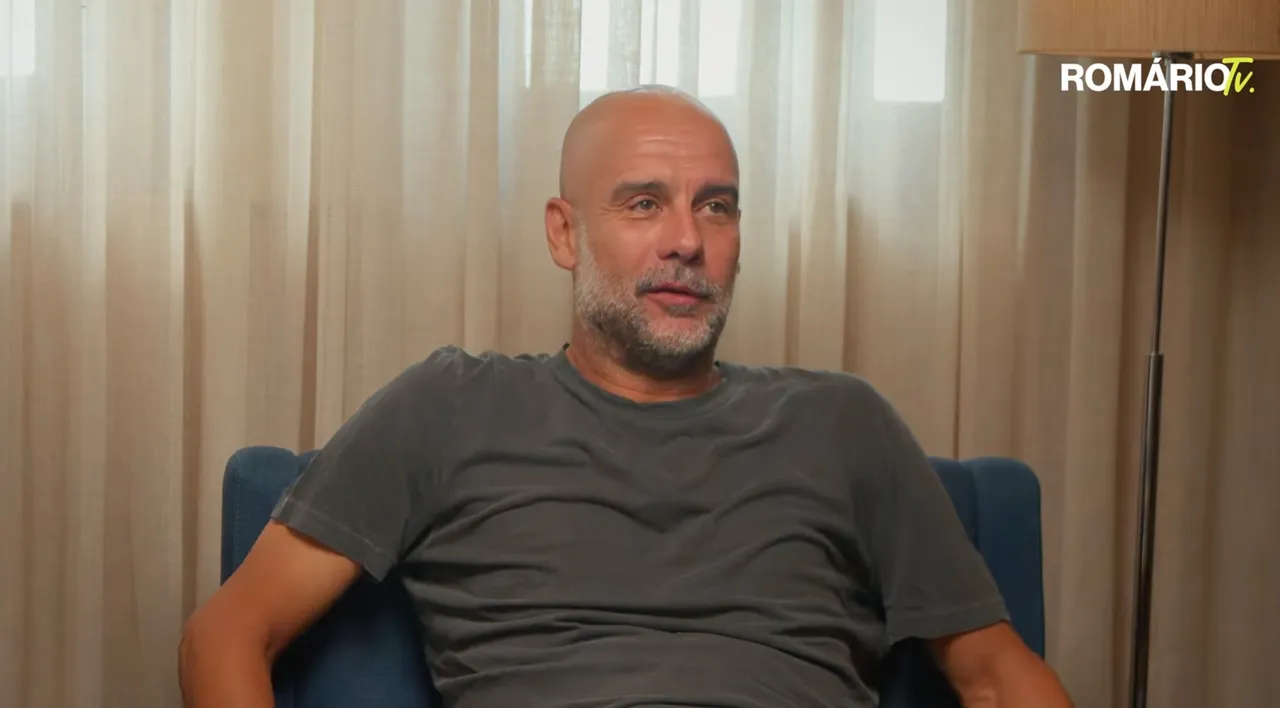
Romário: Was he (Cruyff) the best coach you ever had?
Guardiola: Yes. I've had many good coaches, really many. When it comes to training methods and how to prepare sessions, maybe some did it better than him. But to be a coach, knowing tactics alone isn't enough. He had an intuition for how to manage a team—how to prepare after a win, how to prepare after a loss, how to handle young players and veterans, and how to deal with the media whether they praise you too much or too little.
He knew when to clash with the media, when to leave them hanging, when to reach out, and when to relax a bit. When everyone outside was saying one thing, he would sometimes go the other way to keep us on our toes. Nobody did those things better than him. Nobody, really not a single one.
Romário: Did he protect his players?
Guardiola: Yes, yes, of course he did. But he would also tear into us, and he did it brutally.
Romário: He didn't tear into you. You were his son, you really were his son. You and Txiki Begiristain, both of you were his sons. Pep, how did you make the transition from player to coach?
Guardiola: I wanted to be a coach when I was 26.
Romário: While you were still playing?
Guardiola: Yes, at 26.
Romário: Why?
Guardiola: I can't quite explain it, I just wanted to at the time. I was already analyzing the game, studying how the coach set things up, and watching a bit of video on the next opponent, thinking about how I would arrange things if it were me. The coach would say, "We're going to play like this," and in my head I'd think, "What if we did this? What if we tried another way?" Back then I was already questioning what we were preparing to do in my mind, and I knew very clearly what I wanted to do.
Romário: So, being a coach makes you happier than being a player?
Guardiola: Life as a coach is harder; being a player is more comfortable. But I've been very happy in both.
Romário: Is there more responsibility as a coach?
Guardiola: It's hard to switch off from football. A player can finish a match and go play beach volleyball, while a coach thinks about it 24 hours a day. Don't say "indeed"—how would you know what a coach has to think about all day long?
Romário: You started coaching with Barcelona B. Did that experience help you?
Guardiola: That was the best decision I made while learning to be a coach, the very best decision. Back then it was one match a week, not playing every two or three days. I had time to figure out what we were doing well and time to train. There were no cameras, no journalists, and I had the space to do what I needed to do. Without that experience, I might not have achieved what came later.
Romário: How long were you there?
Guardiola: One year.
Romário: One year? And right after that you went to the Barcelona first team.
Guardiola: Yes, straight to managing the first team.
Romário: You are already one of the greatest coaches in football history. Do you realize that? What do you think sets you apart from other coaches?
Guardiola: Lionel Messi.
Romário: Messi. He made you?
Guardiola: Yes. Having players that good makes you a good coach. What we as coaches can and must do is try to get everyone pulling in the same direction, help them understand how you want to play, and get the players at your disposal to play well together. All three teams I've been at were extraordinary, and the players under me were extraordinary, which is why we were able to win so much.
Romário: Leaving aside how many trophies you've won, of all the teams you've coached, which spell did you enjoy the most?
Guardiola: That's a really tough question, too tough. If you pick one, it's awkward for the others. It's like asking me which goalkeeper I'd pick out of all the ones I've coached.
I have a very, very deep affection for Barcelona. I was a ball boy there, picking up balls. Barca means a great deal to me; that's where I started. If things hadn't gone so well at Barca, I wouldn't have gone to Germany either. I've had a wonderful time everywhere I've been. I'm not just saying that to be polite—I genuinely had a great time. But Barcelona is indeed very special.
Romário: What was the hardest moment of your coaching career?
Guardiola: The hardest, and the biggest challenge, was leaving Barca for Germany. I had to learn German, and Bayern had just won the treble under Jupp Heynckes. It was quite difficult to convince the players during that period. It wasn't that they were unwilling to listen; the difficulty was that they had already won the treble.
When I took over at Barca, the team had finished 18 points behind Real Madrid the previous season. At a time like that, a squad is more willing to follow you. It wasn't desperation, but they had played poorly before and everyone wanted to improve.
But when a team has just won the treble, what else is there to win? There's nothing more left to win. Still, I have to say that Philipp Lahm, Toni Kroos, Manuel Neuer, and Thomas Müller—quite a few players at Bayern—helped me a great deal.
Romário: Do you think tactical understanding of the game is the most important thing?
Guardiola: Nowadays I probably value human relationships more and more. But yes, I became a coach because I love football and I love tactics. That's true.
Romário: Is today's football very different from when we played?
Guardiola: Yes.
Romário: Tactically and technically?
Guardiola: Yes, and physically too—there is much less space on the pitch. Coaches today are far, far better prepared than before. Now there's information, data, wide-angle video, all kinds of material, and the level of coaching is much higher than in the past. The level of coaches today is very, very high.
Romário: If you were just a fan who loves football sitting there watching a match, would you rather watch today's game or the game from our era?
Guardiola: You're a nostalgic romantic. You prefer the past because that was your era. Every era has its good points. Those who watched Pelé and Rivellino play would also say that era was better. All I know is that with today's preparation, diet, and training conditions, Pelé would play very well today too.
Romário: Definitely.
Guardiola: Good players are good players in any era; it's the same in every era. Football in the past had its good points, and so does football today. There were also terrible matches back then, that's for sure.
More from the interview
Guardiola: Uncertain when I will return to the touchline, I'd need someone willing to hire me even if I want to coach