 All Football
Get the app
Estudiantes La Plata face Palmeiras again, returning to Estadio Centenario after 58.5 years
According to Olé, some stories in football are written only once, while others, separated by so much time, seem impossible to repeat. Yet the 2026 CONMEBOL Libertadores has handed Estudiantes La Plata a coincidence straight out of a script — a thrilling, hopeful sense of déjà vu.
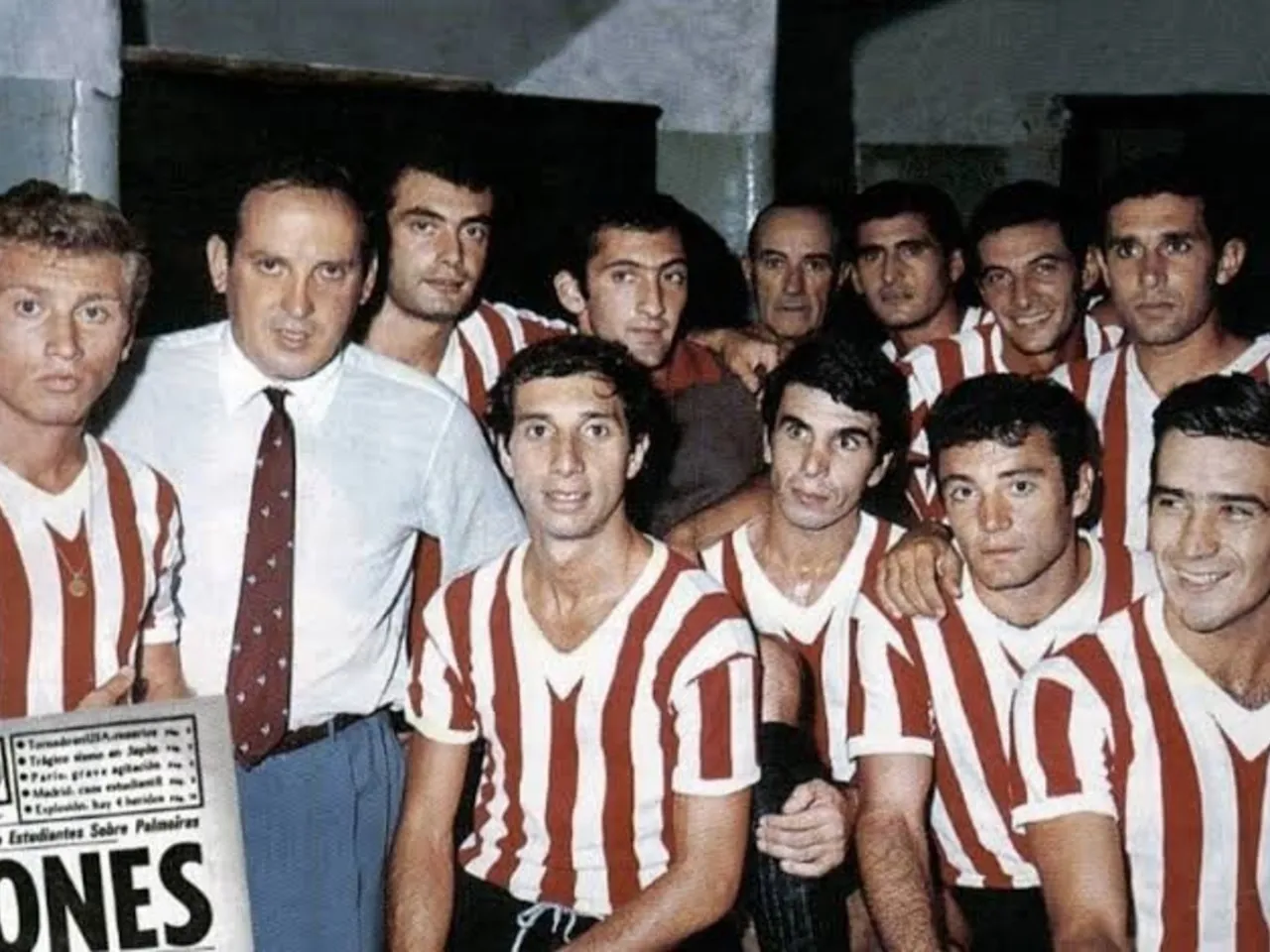
The opponent is once again Palmeiras, and the stage is once again the Estadio Centenario in Montevideo. Memories inevitably drift back to May 16, 1968 — the night Estudiantes La Plata won their first-ever CONMEBOL Libertadores title and laid the cornerstone for one of South American football's greatest dynasties. 21,380 days have passed, a full 58 and a half years, and generations have come and gone, yet that memory remains vivid.
That Estudiantes side coached by Osvaldo Zubeldía changed the way the game was competed forever. They were a team ahead of their time, almost obsessive about physical preparation, tactically disciplined, and firmly convinced that intelligence could bridge any financial gap. They had leaders on the pitch and players who would go on to become legends — Carlos Bilardo and Juan Ramón Verón, to name just two. Beyond that, they possessed something harder to explain: absolute belief in themselves.
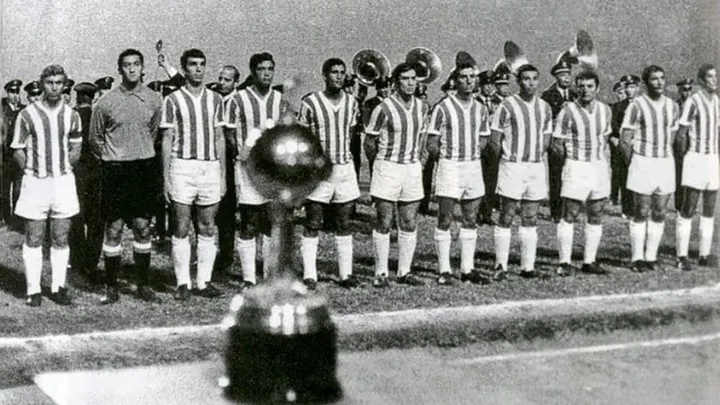
The final against Palmeiras was a long battle. The first leg took place at the old Estadio UNO in La Plata, where Estudiantes fell behind early on what looked set to be a difficult night. Yet in the space of just five minutes, they turned the tie around: Verón equalised in the 83rd minute, and Marcos Flores scored the 2-1 winner in the 88th.
The second leg at the Pacaembu Stadium was a completely different story. Palmeiras stormed forward with a brace from Tupãzinho, the tournament's top scorer, and a goal from Rinaldo. Verón pulled one back, but it was not enough as Estudiantes lost 1-3. With the aggregate score level, the two sides had to play a third, decisive play-off in Montevideo.
Then Zubeldía worked his magic... That week at Peñarol's training ground, he refined every single detail. The day before the match, after checking into the Hermitage Hotel, he put the ball aside and talked the squad through the tactical tweak he had in mind: deploying Carlos Pachamé as a sweeper in front of the back line to man-mark and neutralise Servílio, the key figure in the São Paulo side's attack who cleared the way for striker Tupãzinho. In addition, Óscar Malbernat switched to the opposite flank, and Hugo Medina came in at left-back. Suspended, Zubeldía could not even sit on the bench; he had to watch from the stands and relay instructions to his assistants via a radio device.
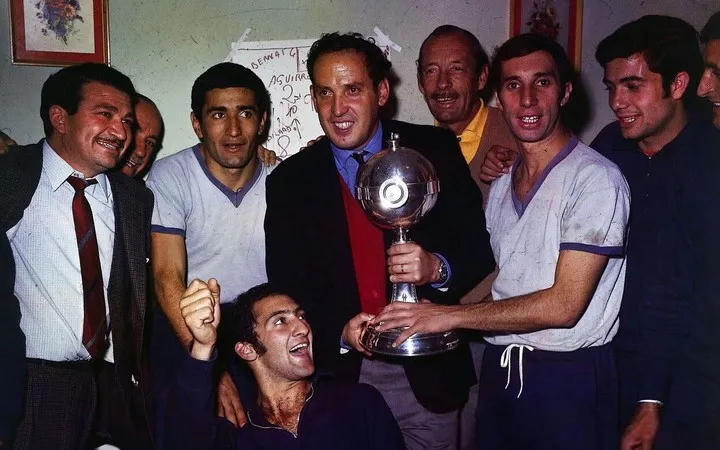
On May 16, 1968, in front of around 55,000 spectators, the historic night arrived. Most of the red-and-white supporters crossed the Río de la Plata that day, packing out the América stand. Estudiantes' starting XI was: Poletti; Malbernat, Aguirre Suárez, Madero, Medina; Pachamé; Bilardo, Ribaudo; Conigliaro, Flores and Verón.
In the 13th minute, Felipe Ribaudo unleashed a fierce left-footed strike past Brazil goalkeeper Valdir to break the deadlock. Palmeiras pushed forward in numbers looking for an equaliser, leaving space behind them. Estudiantes did not waste the opportunity. In the 36th minute of the second half, Medina played a perfectly weighted pass to Juan Ramón Verón, who rounded every defender in his path — including the goalkeeper — before slotting home with his right foot to make it 2-0. That goal brought the curtain down on the match and ushered in an era.
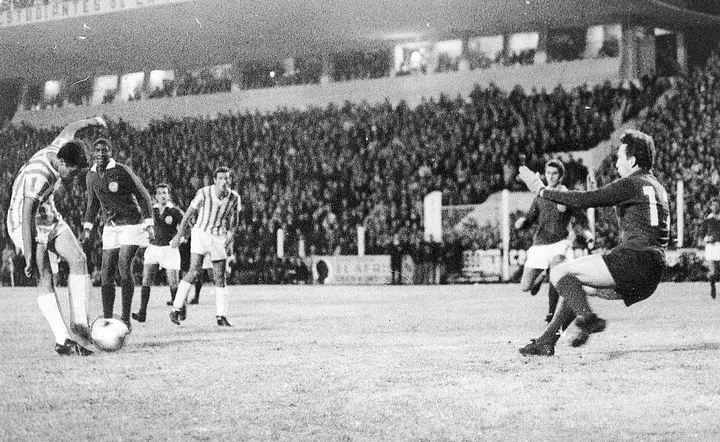
'La Bruja' Verón scored in all three matches of that final, finishing the CONMEBOL Libertadores campaign with nine goals as one of the tournament's brightest stars.
Then came pure release. Scenes of jubilation erupted on the pitch and in the dressing room, with Conigliaro even fainting from the emotion — much like what happened to Leandro Paredes in Barranquilla a few days ago. A message was also left forever on the blackboard: 'Today, Estudiantes La Plata are crowned champions through honesty and hard work.'
It was not just another CONMEBOL Libertadores title; it was the beginning of everything. From that night on, they went on to win the Intercontinental Cup against Man Utd, two more consecutive Libertadores crowns to complete a three-peat, the Copa Interamericana, and, decades later, the 2009 CONMEBOL Libertadores. Today, Estudiantes La Plata have accumulated six international trophies and 14 domestic titles.
In that campaign, Estudiantes went unbeaten in the first stage against Atletico Independiente, Deportivo Cali and Millonarios. Then, in the three-team group stage, they again finished ahead of Independiente and Universitario de Deportes. In the semi-finals, they played out an unforgettable tie against Racing Club de Avellaneda: losing 0-2 in the first leg, winning 3-0 in the second, and then drawing 1-1 after extra time at the Monumental to advance on goal difference.
That tie also produced an extraordinary scene: four players sent off, an on-pitch brawl, and the subsequent police detention of Estudiantes' Ramón Aguirre Suárez and Néstor Togneri alongside Racing's Alfio Basile and Nelson Chabay — all four held in Devoto under a police decree.
That is why, when Estudiantes La Plata face Palmeiras once again at the Estadio Centenario in 2026, the occasion will mean far more than just a final. It will be a journey through time, a memory still intact, and a sense of destiny in standing once more before the stage where the legend began.