All Football
Get the app
Casillas names his top three goalkeepers in history: Buffon, Manuel Neuer, and Thibaut Courtois
Live StreamsLive scoresTV GuideTop picksOdds
On November 26 local time, Real Madrid legend Iker Casillas visited Panama and gave an exclusive interview to RPC Deportes at the Rommel Fernández Stadium, where he had played with Spain 14 years earlier. He looked back on coming off the bench in the 2002 Champions League final to help Real Madrid win their ninth European Cup, named his picks for the greatest goalkeepers in history, and spoke about whether he could coach Real Madrid in the future. This is the first part of the interview.
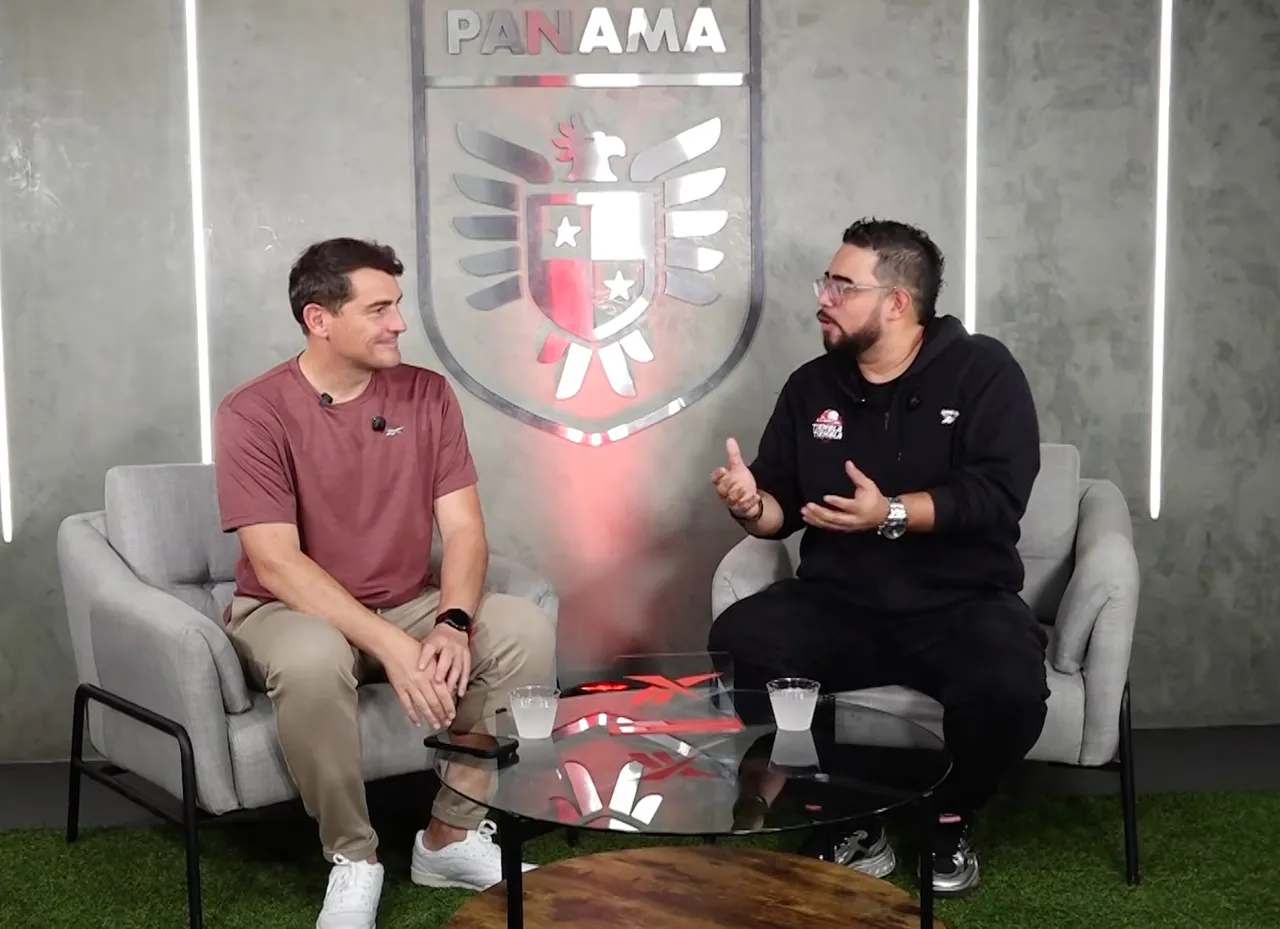
Joining us now is international football's legendary goalkeeper, Iker Casillas. He has won three Champions League titles, five La Liga titles, two European Championships, and of course, the 2010 World Cup with Spain. Iker Casillas, welcome to Panama.
Casillas: Thank you, thank you very much.
Iker, we are right here at the Rommel Fernández Stadium. After you won that momentous title and lifted the World Cup with Spain, you came to Panama in 2012 and played a match here. You were already a world champion then. What do you remember from that trip to Panama?
Casillas: All great memories, especially how warm everyone was to us when we first arrived in Panama. We came here 14 years ago. I remember everyone was really looking forward to Spain's visit. We spent two or three very pleasant days here, and especially, as I just said, we felt so much goodwill and affection from so many people. We never knew before that so many people around the world were happy about what Spain had achieved.
Yes, back then you could feel how many people were following Spain. Turning back to yourself, you're a kid from Móstoles who had to travel so far back and forth as a child, starting from Real Madrid's youngest youth teams, coming up through every level of the academy, and eventually making a name for yourself at Real Madrid. What does that journey mean to you? After all, only a fraction of the kids who enter the academy make it to where you did.
Casillas: That's a very interesting question. Many families have to find ways to support their children in sports so they can have the chance to chase their dreams. Kids who play at Real Madrid all hope to become professional players one day. Sometimes, it's really hard to break through here, and you have to go elsewhere to find your own path.
Going back to your question, what I remember most are those 30-to-40-kilometer trips back and forth. The roads back then weren't like they are now—the conditions are much better today. Back then, you had to spend a lot of time on the road, and your family had to spend a lot of time helping you, putting other things aside to find time to take you to training. The weather wasn't always good either; sometimes you were freezing, and other times it was terribly hot. Outsiders don't see those sacrifices, but for you, it was something you went through every single day.
Iker, let's talk about that final against Leverkusen. You didn't start that match—César did. After he got injured, you came on as a substitute. With those iconic saves late in the game, you could say you were the man of the match. Coming off the bench in an emergency to help Real Madrid hold on and win the title, do you still remember what that was like?
Casillas: I was 21 years old at the time, and I hadn't played for two months before that, so I hadn't been able to help the team. For me at that time, it was a very complicated and tough period. Then it turned out to be my turn to play in that final. In the history of the Champions League final, something like that had never happened before.
For the next 25 minutes, my nerves never relaxed. Leverkusen were a particularly strong team that year, really strong. They pinned us back; we couldn't get out from in front of our goal, couldn't get out of the box, and could only keep defending. I remember it even started raining near the end.
All of us dropped back in front of the goal, trying to block every ball that came in. In the end, we achieved our goal and won the club's ninth European Cup. It was truly thrilling. I think it was a magical time that I experienced, and also a turning point. After that, I became much clearer about where I wanted to go in the future and what I wanted to prove.
When you were a kid, did you imagine yourself lifting the Champions League trophy with Real Madrid more often, or lifting the World Cup with Spain?
Casillas: You might think I'm a bit arrogant, but I imagined both. To have dreams like that, you have to picture them in your mind many times for them to have a chance of coming true, right?
When I was young, I watched the 1994 World Cup and saw Dunga lift the World Cup at the Rose Bowl. I also watched the 1998 Champions League and saw Manolo Sanchís lift the trophy in Amsterdam. That was my goal, and I hoped that one day I could do it too.
Whenever Barcelona and Real Madrid face each other, it feels like the whole world stops, and it's still like that today. But for professional players, how do you deal with that tension the day before the match?
Casillas: Oh man.
How do you hold back that urge to just get out on the pitch right away? Do you have a fixed pre-match routine? Do you do anything special before the game?
Casillas: You know how it is? Everyone comes to talk to you about the game—you just can't escape it. They keep talking about it. As soon as the match before El Clásico finishes, the next three days are all about El Clásico. They talk about it in the media, they talk about it on the streets; when you go out to buy bread or grab a drink, people come up to talk to you about it.
You try to shift your focus away a little. The first few times you play in El Clásico, all that weighs on you. Once you become a veteran, you slowly learn how to handle it. The most important thing is to put all of that aside first. Once the match starts, all the outside noise fades away, and the only thing you think about is beating your opponent. Of course, it also depends on what competition you're playing in. Afterward, other topics pop up—people are always talking, talking all the time.
Let's talk about history. Iker Casillas is widely recognized as one of the greatest goalkeepers in world football history. Excluding yourself, who are your top three? They can be players you've watched play or players you've heard about. Just give me three names—this one, this one, and this one—without counting yourself.
Casillas: One is definitely Gianluigi Buffon. Another, I'd say, is Manuel Neuer. After that, it gets a bit tough to choose. The goalkeepers I'm talking about all had brilliant, outstanding careers and were very important to their respective teams. Not to mention they've won the World Cup, so you could say they've reached the very top. I think Thibaut Courtois could also make the top three. But when you look at the goalkeepers of my generation—Oliver Kahn, Peter Schmeichel, Edwin van der Sar, and Petr Čech—you see, I can't leave all of them out. And Víctor Valdés as well. Growing up, there were so many goalkeepers who were all fantastic. So to really pick just one... and that's without even mentioning Sepp Maier.
That German goalkeeper.
Casillas: There are just too many, way too many.
Right. And Michel.
Casillas: Michel Preud'homme. It's really impossible to choose.
That Belgian goalkeeper.
Casillas: Impossible to choose, truly impossible.