 All Football
Get the app
From the Marshes to Champions League Nights: 140 Years of Tottenham's Passion and Tears
Live StreamsLive scoresTV GuideTop picksOdds
Introduction
Hello everyone, this is Voice of the South Stand. In the morning light of North London, a splash of white spreads from the turf of a century ago, drifting across the dusty streets of the Victorian era, through layers of cheers and silence in the stands, and finally settling into tonight's brightly lit stadium. No other colour is so tightly intertwined with the lifeblood of a city. Frost-white shirts glide down the wings at blistering pace, while the proud cockerel stands atop the crest, crowing at the dawn mist and echoing a heartbeat that has never stopped for over a century. Here, fluid passing is a grace etched into the bone, and unyielding pride is a faith running through the veins. The ecstasy of lifting trophies has swept across the terraces like a tide, and the quiet desolation of defeat has lingered down long streets. Legends have ended and begun their journeys here, and young talents have chased the wind to stardom. Those goals, roars, tears, and glories have all been carefully preserved by time. As the songs rise from the stands once more, the story begins again. Welcome to 'One City, One Team'. In this episode, we explore the Lilywhites — Tottenham Hotspur.
Club History
Humble Beginnings
Unlike many clubs we have covered before, Tottenham was originally formed by a group of students from a cricket club. On September 5, 1882, students from the Hotspur Cricket Club in North Tottenham, London, decided to form a football team to stay fit during the winter when there were no cricket matches. The football team took its name directly from their cricket club — Hotspur F.C. The main founder was 13-year-old Bobby Buckle, who naturally became the club's first captain after its founding.
On September 30, 1882, Tottenham played the first match in their history. They faced a local amateur side called the Radicals in a friendly on the Tottenham Marshes, losing 2-0. In 1883, at the request of the boys, John Ripsher, a vicar at All Hallows' Church, took over the team and became the club's first president. After taking charge, Ripsher focused on reorganising the club, securing pitches for matches, and handling day-to-day administration.
Over the next two years, Tottenham continually arranged friendlies against various local amateur teams in North London, using these matches to gel their squad and gain experience. By 1885, Tottenham were no longer just a group of schoolboys playing casual football; their quality had improved significantly, and they were ready for competitive action. At the time, London had a regional amateur competition called the London Association Cup, which did not require professional status and was open mainly to local amateur clubs, churches, and school teams. Hoping to test themselves against more established local amateur sides, Tottenham entered the London Association Cup in 1885.
On October 17, 1885, Tottenham played their first-round match in the London Association Cup, beating St Albans 5-2 in what stands as the club's first recorded competitive fixture. However, in the second round they suffered a heavy 8-0 defeat to London powerhouse Casuals. Despite the thrashing, Tottenham's local popularity surged after their cup run, and crowds grew larger. The public pitch they had been using as a home ground became too difficult to manage. Bobby Buckle and the other founders began planning a move to a private, enclosed ground where they could legally charge admission. Eventually, they found a site at Northumberland Park for an annual rent of £17. On October 13, 1888, Tottenham played a friendly against Oriel Gymnasium there, marking their debut at the new ground.
In 1888, the English Football League was founded, but all its members were from the north of England, leaving the south without an established league. Southern clubs also wanted a league with a stable schedule, fixed opponents, and regular crowds. In 1892, seven southern clubs — including Tottenham — joined forces to form an amateur competition called the Southern Alliance. In the 1892/93 season, Tottenham finished third. Unfortunately, the Southern Alliance was short-lived, lasting only that single 1892/93 season before disbanding.
In 1894, Tottenham applied to join the Southern League, which was spearheaded by Millwall Athletic, but missed out after failing to secure enough votes. Undeterred, Tottenham soon entered the FA Cup for the very first time. They were admitted to the 1894/95 FA Cup, though they had to start in the qualifying rounds. Tottenham performed brilliantly in the first three qualifying rounds, defeating West Herts, Wolverton, and Clapton. In the fourth qualifying round, they faced a strong professional side in Luton Town. Despite the huge gap in quality, Tottenham refused to give in and held their opponents to a gritty 2-2 draw at home. Under the rules of the time, a draw meant a replay, which took place on December 19, 1894. This time, there was no miracle: Tottenham lost 4-0 away, bringing their maiden FA Cup campaign to an end.
Even though they failed to reach the main draw, that FA Cup run had a profound impact on Tottenham. Seeing the advantages held by professional clubs, the club committee accelerated internal discussions about turning professional. In December 1895, the committee voted in favour of Bobby Buckle's proposal to turn professional. On December 20, 1895, Tottenham registered with the FA, completing their transformation from an amateur side into a professional club.
In 1896, Tottenham applied to join the Southern League once again. That summer, the league's club representatives voted to approve their application. In their debut 1896/97 Southern League season, Tottenham recorded 9 wins, 4 draws, and 7 defeats in 20 matches, finishing fourth with 22 points (under the system of 2 points for a win and 1 for a draw).
On April 8, 1898, during a home match against Woolwich Arsenal, 14,000 fans packed into the ground — far exceeding its capacity. Many supporters climbed onto the roof of a refreshment stand to watch, causing it to collapse and injuring several people. The incident exposed the limitations of Northumberland Park, which was too cramped, lacked proper stands, and had inadequate safety facilities. It was clear the ground could no longer serve a professional club with a rapidly growing fanbase. Shortly afterward, the club leased a disused nursery behind Tottenham High Road belonging to the Charrington Brewery and built a brand-new stadium there. The club initially considered naming it Gilpin Park, but because of a nearby pub called the White Hart, people habitually referred to the ground as 'White Hart Lane', and the name eventually stuck. On September 4, 1899, White Hart Lane hosted its inaugural friendly, with Tottenham thrashing Notts County 4-1. Dramatically, the very first goal at White Hart Lane was scored by Notts County centre-forward Tommy McCairns.
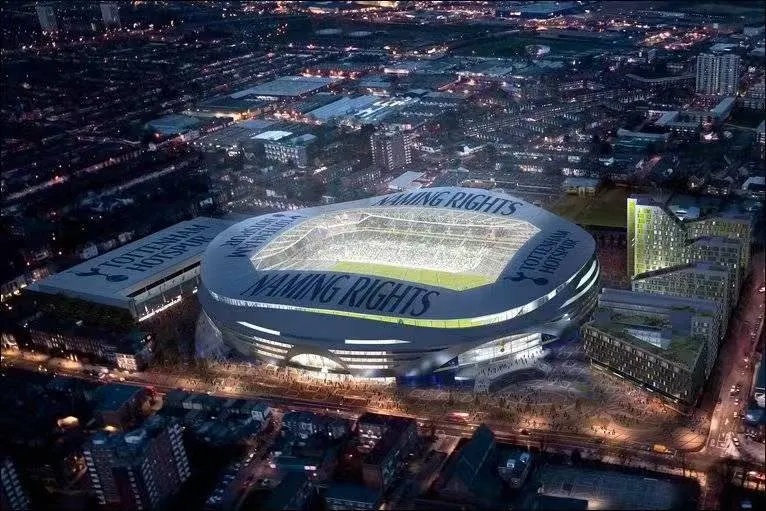
White Hart Lane in the modern era
Laying the Foundations of a Legend
In their first full season after moving to White Hart Lane, Tottenham won the first official league title in their history. In the 1899/00 Southern League campaign, they won 20, drew 4, and lost 4 of their 28 matches, amassing 44 points to edge out traditional southern powerhouse Southampton for the title. That Southern League crown was Tottenham's first major league trophy, marking their rise from a small local side into a genuine force in southern English football.
Yet their greatest moment was still to come. In the 1900/01 season, Tottenham marched all the way to the FA Cup final, where they drew 2-2 with Sheff Utd. In the replay on April 27, Tottenham defeated their opponents 3-1 to lift the FA Cup trophy. It was the club's first national title, cementing their status in English football. To this day, Tottenham remain the only non-League club ever to win the FA Cup — a record that still stands.
After winning the FA Cup, Tottenham realised that staying in the Southern League limited their ceiling and began seeking entry into the national Football League. Despite their newfound fame as FA Cup winners, their initial applications were repeatedly rejected. At the time, the Football League was dominated by northern clubs, who were reluctant to admit southern teams out of fear it would dilute their influence. In 1908, Tottenham's chance finally arrived. Second Division side Stoke went bankrupt and withdrew from the league, leaving a vacancy. Tottenham seized the opportunity, reapplied, and defeated Lincoln City in the third round of voting to gain entry into the Second Division. In their very first season, they finished runners-up and won promotion to the First Division.
However, once in the First Division, Tottenham could not replicate the dominance they had shown in the second tier, spending each season battling relegation. In the 1914/15 season, they finished 20th with 8 wins, 12 draws, and 18 defeats from 38 matches, suffering relegation. Immediately after that season, World War I broke out and league football was suspended.
In 1919, the Football League resumed and decided to expand the First Division from 20 to 22 teams. Based on the standings from the final pre-war season, Chelsea and Tottenham were the two clubs due to be relegated. However, because Chelsea had been pushed into the relegation zone by a match-fixing scandal involving Manchester United and Liverpool, the league decided to let Chelsea keep their top-flight place. That left one remaining spot in the First Division, to be decided by a vote. The candidates were Tottenham, Barnsley, Wolves, Arsenal, Birmingham City, Hull City, and Nottingham Forest. In the end, Arsenal won the vote with 18 votes to claim the final First Division spot. Tottenham were furious, arguing that pre-war relegation rules should have been respected and that they, as the relegated top-flight side, should have been given priority. Moreover, Arsenal had finished fifth in the Second Division before the war and had no sporting merit for promotion, yet were voted straight into the top flight. Despite Tottenham's protests, Arsenal took the spot and Tottenham were forced to play in the Second Division. This incident created irreconcilable bitterness between the two clubs, laying the foundation for the fierce North London derby rivalry.
After dropping into the Second Division, Tottenham did not wallow in self-pity. Instead, they won the Second Division title in just one season to bounce straight back to the top flight. Even more memorably, they won the FA Cup again after a 20-year wait. On April 23, 1921, Tottenham faced Wolves in the FA Cup final at Stamford Bridge. Heavy rain just before kick-off left the pitch muddy and waterlogged, posing a stern test for Tottenham's passing style. Nevertheless, Tottenham controlled midfield from the start and created several dangerous chances, only for the Wolves goalkeeper to pull off a string of fine saves to keep it 0-0 at half-time. In the 53rd minute, the winning goal arrived. Tottenham left-winger Jimmy Dimmock received a pass, beat two defenders, and fired a shot from 25 yards on the corner of the box into the far corner, leaving the goalkeeper no chance. Wolves threw everything forward in the remaining minutes, but Tottenham's resolute defence held firm to secure a 1-0 victory and lift the FA Cup for the second time.
Carrying that momentum into the league, Tottenham finished second in the 1920/21 First Division with 51 points from 42 matches (21 wins, 9 draws, 12 defeats) — their first genuine title challenge in the top flight. However, they could not sustain that form. Key players soon left due to transfers and injuries, and results declined. Tottenham finished below 12th for five consecutive seasons and were relegated in 1927/28, not returning to the First Division until 1933/34. Upon their return, they stunned everyone by finishing third in their first season back, but it proved a brief flash in the pan: in 1934/35, Tottenham finished bottom of the table and were relegated again, spending the next several years in the Second Division.
On September 8, 1939, due to the outbreak of the Second World War, the English Football League officially announced the suspension of national competitive league football. It was not until August 1946 that national league football in England resumed.
After the war, Tottenham continued to struggle in the Second Division until 1949, when Arthur Rowe became the club's manager and turned things around. Upon taking charge, Rowe first taught the players his innovative "push and run" style of play, which required players to pass the ball and immediately sprint forward to lose their markers and receive a return pass—a tactic still used today as the one-two or wall pass. At the same time, Rowe signed players such as Alf Ramsey and Danny Blanchflower in the transfer market, building a title-contending squad for Tottenham. In his very first season in charge, Rowe led the team to the Second Division title and promotion to the top flight. Once in the First Division, they pipped Manchester United to the title with a record of 25 wins, 10 draws, and 7 losses, securing the first top-flight league championship in Tottenham's history and making them the first team to win the Second and First Division titles in consecutive seasons.
However, Tottenham's golden era did not last long. As opponents gradually figured out Rowe's tactics, the team's results began to decline, and the heavy workload took a toll on Rowe's health, leading him to resign due to illness in 1955. Following Rowe's departure, Jimmy Anderson took over as manager. Anderson's first season in charge was disappointing, with Tottenham finishing just two points above the relegation zone. Yet that season was not without its bright spots: after seeing the team struggle for goals in the first half of the campaign, Anderson signed centre-forward Bobby Smith in the winter transfer window. It proved to be a crucial signing, as Smith's arrival immediately solved Tottenham's attacking woes, and his vital goals in the second half of the season helped keep the club up.
After a season of gelling together, Anderson led Tottenham to a remarkable turnaround in the 1956/57 season, finishing with 22 wins, 12 draws, and 8 losses from 42 games for 56 points, claiming the First Division runners-up spot. Compared to the previous campaign when they were mired in a relegation battle, the scale of the resurgence was astonishing. In the following 1957/58 season, Tottenham maintained their strong form to finish third in the First Division, while Bobby Smith scored 36 goals in a single season to equal the club record previously held by Ted Harper.
However, in the 1958/59 season, Tottenham suffered a disastrous start. Before the campaign even began, key winger Cliff Jones broke his leg in a training-ground collision with centre-back Peter Baker. Shortly after, long-simmering tensions between club captain Danny Blanchflower and manager Jimmy Anderson boiled over, with their rift becoming public knowledge. Under such circumstances, Tottenham's results were predictably poor. The team failed to pick up a single point in August, and their slump continued through September and October. Exhausted by the situation, Anderson eventually tendered his resignation.
In October 1958, Bill Nicholson officially took over as Tottenham manager. His first match in charge came on October 11, 1958, at home against Everton, where Nicholson oversaw a 10-4 thrashing of the visitors, ushering in his era with a resounding victory. Upon taking charge, Nicholson first stabilized the dressing room, respecting Blanchflower's influence while establishing clear team rules to reunite a fractured squad. With the dressing room settled, Nicholson began upgrading Tottenham's tactical system, retaining their trademark quick passing and movement while adding midfield physicality and defensive resilience, turning Tottenham into an all-round side capable of both fluid possession and fierce pressing.
The 1960/61 season marked the pinnacle of Nicholson's reign at Tottenham. They opened the league campaign with 11 consecutive victories, setting a historic record for the best start to an English top-flight season. Even more remarkably, Tottenham maintained that blistering form throughout the entire campaign. Across 42 First Division matches, they recorded 31 wins, 4 draws, and 7 losses, finishing eight points clear of second-placed Sheffield Wednesday to claim the title. In the FA Cup, Tottenham were equally dominant, sweeping aside every opponent on their way to the final. On May 6, 1961, Tottenham defeated Leicester 2-0 in the FA Cup final to lift the trophy, sealing a historic league and cup double.
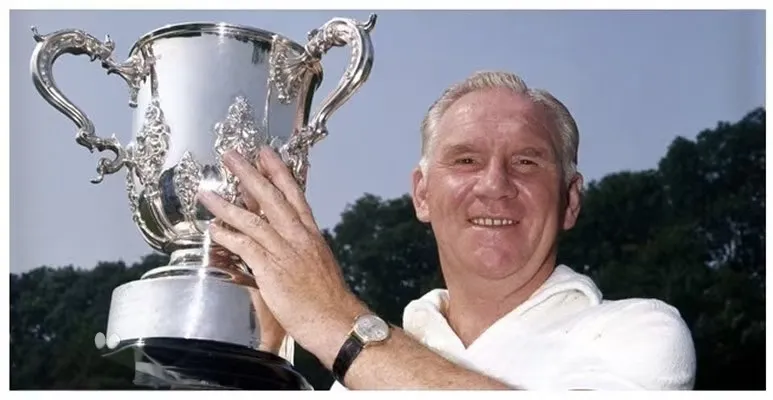
Bill Nicholson
Pioneering in Europe
In the following 1961/62 season, competing on four fronts, Tottenham maintained their strong form. They began by beating Sheffield Wednesday 3-2 in the Charity Shield and went on to defend their FA Cup crown with a 3-1 victory over Burnley in the final. Yet it was also a season tinged with regret, as the demands of fighting on multiple fronts took their toll, causing a mid-season dip that left them third in the league. In the European Cup (the predecessor to the Champions League), Tottenham reached the semi-finals, where they faced Eusébio's Benfica, ultimately losing 4-3 on aggregate to fall just one step short of the final.
In the 1962/63 season, Tottenham qualified for the European Cup Winners' Cup by virtue of defending their FA Cup title. Still smarting from their European Cup semi-final defeat to Benfica the previous year, the entire squad viewed the Cup Winners' Cup as the stage to prove their worth to Europe. Driven by that determination, Tottenham produced an outstanding campaign, knocking out SK Slovan Bratislava and OFK Beograd to reach the final. There, they faced defending champions Atlético Madrid. Few gave Tottenham a chance beforehand, but rather than being discouraged, they used the doubts as motivation. Tottenham went on to thrash Atlético Madrid 5-1 in the final, becoming the first British club to win a major European trophy. With that triumph, the chant "Glory Glory Tottenham Hotspur" echoed across Europe.
Just when it seemed Tottenham were poised to build a dynasty, misfortune struck repeatedly. First, in the summer of 1964, midfield maestro John White was tragically killed after being struck by lightning on a golf course. Soon after, captain Danny Blanchflower suffered a serious knee injury and retired in 1964, while key player Dave Mackay suffered two broken legs in quick succession and was sidelined for long spells. Tottenham's title-winning core began to break apart.
Faced with these setbacks, Nicholson did not sit idle; instead, he immediately began rebuilding the squad. He signed players such as Pat Jennings, Alan Mullery, and Terry Venables to form a new backbone for the team. Between 1963 and 1966, as the new-look squad was still gelling, Tottenham went without a major trophy. It was not until the 1966/67 season that Tottenham lifted silverware again, beating Chelsea 2-1 in the FA Cup final.
By the late 1960s and early 1970s, Nicholson's second great side came into its own. In the 1970/71 season, they defeated Aston Villa 2-0 in the League Cup final to claim the club's first-ever League Cup title. Then, in the inaugural 1971/72 UEFA Cup, Tottenham beat Wolverhampton Wanderers 3-2 on aggregate in the two-legged final, becoming the first English club to win two different European trophies. In the 1972/73 season, Tottenham lifted the League Cup once more.
In the 1973/74 season, Tottenham reached the UEFA Cup final again, but this time they could not repeat their heroics, losing 4-2 on aggregate to Feyenoord to finish as runners-up. Worse than the defeat, however, was the behaviour of a large section of Tottenham fans during the away leg, who rioted and fought in the stands, causing scenes of chaos. Nicholson, a football purist who despised violence, even took to the stadium public address system to condemn the rioting supporters: "You are a disgrace to Tottenham and a disgrace to England—football is not war!" The incident shattered his faith in the game, and he later admitted: "What happened in Rotterdam was the final straw; I didn't want to be part of it anymore." Just months after the UEFA Cup final, a disillusioned Nicholson resigned, bringing his 16-year reign as Tottenham manager to an end.
Following Nicholson's departure, Terry Neill took over as Tottenham manager. When he arrived, the club was in dire straits, taking just two points from their opening six league games to sink into a relegation battle, while also suffering a humiliating 4-0 home defeat to Middlesbrough in the League Cup—a truly disastrous start. Moreover, because Neill was a former Arsenal player, Tottenham fans were hostile toward him from day one. Under those conditions, Tottenham's struggles were unsurprising, and they only secured survival on the final day of the 1974/75 season with a 4-2 win over Leeds United. In the 1975/76 season, Tottenham showed slight improvement but remained far from the title race, finishing ninth in the league and suffering early exits in the cups.
In June 1976, Terry Neill received an offer from his former club Arsenal and resigned to take charge there. Following Neill's departure, assistant manager Keith Burkinshaw was promoted to become Tottenham's new head coach. Burkinshaw's first season in charge was bleak, as the team failed to shake off their slump and their leaky defence conceded 72 goals in 42 league games—the worst defensive record in the division. At the end of the 1976/77 season, Tottenham finished 22nd and were relegated, ending a 27-year stay in the top flight.
Following relegation, the board resisted the urge to sack Burkinshaw and stood by him, giving him the chance to rebuild. Burkinshaw repaid that faith by overhauling the team's tactical approach, shifting from passive defending to a more proactive, possession-based style, while promoting academy talents such as Chris Hughton and Tony Galvin to inject fresh blood into the squad. His efforts paid off: in the 1977/78 Second Division campaign, Tottenham recorded 20 wins, 16 draws, and 6 losses for 56 points, edging out Brighton on goal difference to finish second and seal an immediate return to the First Division.
In their first season back in the top flight, Tottenham made headlines across England by signing Osvaldo Ardiles and Ricky Villa from Argentina's World Cup-winning squad—the first time English football had brought in overseas superstars of that calibre. However, the arrival of the two stars did not trigger an immediate surge up the table, and Tottenham endured a modest campaign to finish mid-table in the First Division, which was understandable given the time needed for the new signings to adapt.
In the 1980/81 season, Tottenham focused their efforts on the FA Cup and were rewarded with a run to the final. After a 1-1 draw with Manchester City in the initial final, Ricky Villa scored a famous solo winner—dribbling past four defenders—to seal a 3-2 victory in the replay, handing Burkinshaw his first major trophy as Tottenham manager. The following 1981/82 season proved to be the peak of Burkinshaw's tenure, as Tottenham finished fourth in the league to qualify for Europe and successfully defended their FA Cup crown, a rare feat at the time.
However, that peak did not last long, as the demands of competing on multiple fronts took a toll on the squad over the next two seasons, leading to a dip in form. The 1983/84 season was Burkinshaw's final campaign in charge of Tottenham, and in the UEFA Cup they knocked out strong sides such as Feyenoord and Bayern to reach the final. Facing Belgian giants Anderlecht, the two-legged final ended 2-2 on aggregate before goalkeeper Tony Parks emerged as the hero in the penalty shootout to secure the trophy. At the end of the season, Burkinshaw stepped down, leaving the UEFA Cup as his parting gift to White Hart Lane.
After Burkinshaw's departure, Tottenham entered a period of turbulence, cycling through several managers with inconsistent results. It was not until the 1990/91 season that Tottenham lifted silverware again, beating Nottingham Forest 2-1 in the final to win the FA Cup after a nine-year wait.
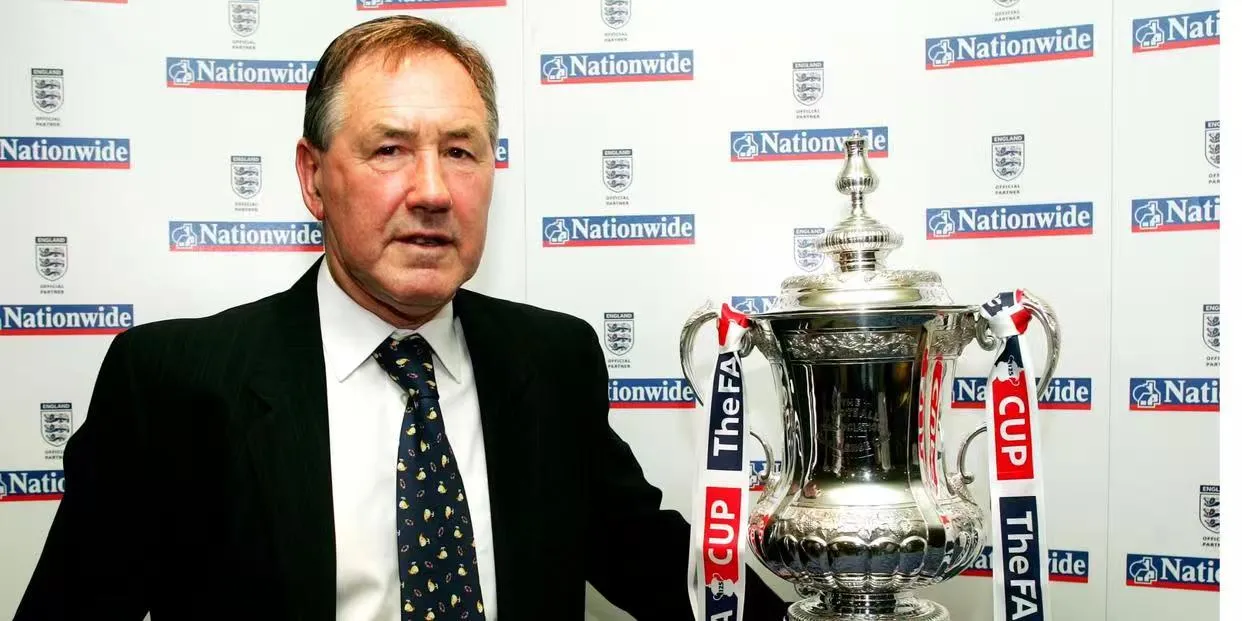
Keith Burkinshaw
Years of Turbulence
Yet that FA Cup triumph did not end Tottenham's instability; the club continued to change managers frequently, and their league form remained erratic, often hovering near the relegation zone. It was not until the 1998/99 season, when former Arsenal manager George Graham took charge, that Tottenham steadied the ship. Previously, Tottenham had prided themselves on playing expansive, attacking "beautiful football," but Graham transformed them into a pragmatic, defensively disciplined side built on counter-attacking. When questioned about the shift in style, Graham famously replied: "The fans are fed up with playing pretty football and losing."
Just six months into his tenure, Kieran Graham faced the first major test of his Tottenham managerial career. In the 1998/99 season, Tottenham and Leicester met in the League Cup final; a victory would hand Graham his first trophy in charge of the club. Both sides played conservatively from the kick-off, resulting in a dull first half that ended 0-0. In the 63rd minute, Tottenham left-back Justin Edinburgh and Leicester midfielder Robbie Savage clashed off the ball, and Edinburgh was shown a red card. Down to ten men, Tottenham gradually lost control of the match. Just when almost everyone expected them to lose, Allan Nielsen stepped up. In second-half stoppage time, Tottenham striker Steffen Iversen's shot from a tight angle was parried into the air by the Leicester goalkeeper, and Nielsen followed up with a diving header to score a dramatic late winner and lift the trophy. It was Tottenham's first piece of silverware since the 1991 FA Cup—eight years earlier—and the only trophy Graham won during his time at the club.
That League Cup triumph earned Tottenham a place in the 1999/00 UEFA Cup, but they were embarrassingly knocked out in the second round by 1. FC Kaiserslautern, bringing a swift end to their European campaign. Their domestic form was equally disappointing, with early exits from both the League Cup and the FA Cup, and a 10th-place finish in the Premier League. The poor results brought tensions between star player David Ginola and Graham over the team's tactical style to a head. That summer, Tottenham sold Ginola to Aston Villa for £3 million—a deal that stunned White Hart Lane and sparked outrage among supporters. Seeing their talisman, who had recently won both the PFA Players' Player of the Year and FWA Footballer of the Year awards, offloaded so easily led many fans to blame Graham for dismantling the team's brightest attacking weapon.
Following Ginola's departure, Tottenham's attacking creativity dropped sharply. They made a sluggish start to the 2000/01 league campaign, playing uninspiring football. At the same time, friction grew between Graham and club chairman Alan Sugar: Graham complained about a lack of transfer funds, while Sugar criticized the quality of his signings. In February 2001, ENIC Group completed a takeover of Tottenham, bringing Daniel Levy onto the board and ushering in a new financial era for the club.
A month later, Graham was sacked by the new board for breach of contract after publicly criticizing the club's budget and leaking internal financial details. Worse was to come after his departure. Club captain Sol Campbell rejected Tottenham's contract extension offer and joined arch-rivals Arsenal on a free transfer—one of the most painful moments in modern Spurs history. Campbell later recalled that the seeds of his departure had been planted during Graham's tenure, when he felt the club failed to give him adequate support during an off-field dispute.
Campbell's exit tore the heart out of Tottenham's defence, and without the funds to sign a centre-back of similar calibre, the club had no choice but to promote academy graduate Ledley King to fill the void. Even so, the backline remained unstable. Over the next several seasons, Tottenham languished in mid-table, and in the 2003/04 campaign they narrowly avoided relegation.
After 2004, Levy introduced a continental-style sporting director structure and shifted the club's recruitment strategy toward high-value overseas talent, signing players such as Michael Carrick, Jermain Defoe, and Leon Robinson. Tottenham gradually emerged from the shadow of Campbell's departure, finishing in the upper half of the table for several consecutive seasons and regularly qualifying for Europe. In 2007/08, they reached the League Cup final and beat Chelsea 2-1 thanks to Jonathan Woodgate's extra-time header, lifting the first trophy of the Levy era. In 2009/10, Tottenham finished fourth in the Premier League to qualify for the Champions League for the first time in their history.
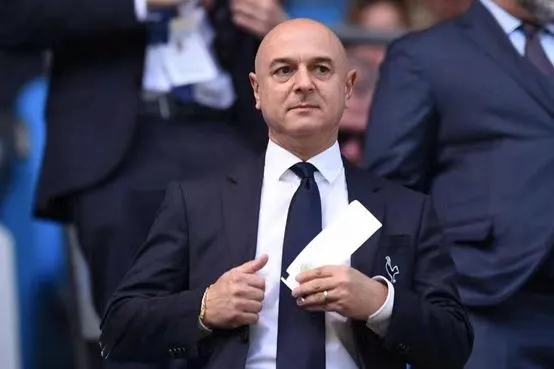
Daniel Levy
A New Chapter
In the 2010/11 Champions League group stage, Tottenham faced Inter. Gareth Bale produced a breakout performance at the San Siro, repeatedly terrorizing Maicon down the flank to announce himself as one of the most exciting wingers in world football. Tottenham topped the group ahead of Inter as the tournament's surprise package, then beat Milan in the round of 16 to reach the quarter-finals. Unfortunately, they ran into a far stronger Real Madrid side in the last eight and were eliminated 5-0 on aggregate. That campaign showcased Tottenham's thrilling, high-tempo style on Europe's biggest stage and produced unforgettable moments. Even though they could go no further, reaching the quarter-finals was a remarkable achievement for a club returning to Europe's elite after so many years away.
In 2013, Real Madrid signed Bale for a world-record fee of £85.3 million, handing Tottenham a massive transfer windfall. Armed with that money, Spurs spent heavily, bringing in seven players in one window: Roberto Soldado, Erik Lamela, Paulinho, Étienne Capoue, Vlad Chiricheș, Nacer Chadli, and Christian Eriksen, with total spending exceeding £110 million. The club's strategy was clear: rather than trying to find a single "new Bale," they wanted to spread his attacking output across several signings to build a balanced squad capable of sustaining a Champions League challenge. However, the gamble backfired. Under the manager's tactical system at the time, the seven newcomers struggled to gel, and ultimately only Eriksen and Chadli lived up to expectations.
In November 2013, Tottenham suffered a 6-0 thrashing away to Manchester City, followed by a 5-0 home defeat to Liverpool—two heavy losses that led directly to André Villas-Boas's dismissal in December. Tim Sherwood took over as interim manager for the rest of the season, giving opportunities to young players like Harry Kane and Nabil Bentaleb. Tottenham finished sixth in the Premier League to qualify for the Europa League, and Sherwood was dismissed at the end of the campaign.
In 2014, Tomás Pochettino took charge and began rebuilding the squad. Building around Eriksen in midfield alongside Kane, Dele Alli, and Heung-min Son, he forged a highly competitive side. Results soon proved his methods right: in 2015/16, Tottenham finished third, spending much of the season in the title race and even briefly topping the table as Leicester's closest challengers in their miracle campaign. The 2016/17 season marked the peak of Pochettino's tenure, as Spurs recorded 26 wins, 8 draws, and 4 losses for 86 points—finishing second, just one step short of the title.
In May 2017, after playing their final match of the season, Tottenham demolished White Hart Lane to build a brand-new stadium on the same site. Because of the construction, Spurs temporarily relocated to Wembley Stadium for the 2017/18 season. The original plan was to spend just one year at Wembley before moving into the new ground for 2018/19, but construction delays forced them to stay longer, and they did not return to the rebuilt stadium until April 2019. Despite the upheaval, Tottenham remained highly competitive on the pitch, even reaching the 2018/19 Champions League final, where they lost 2-0 to Liverpool.
However, Tottenham could not sustain that level. In the 2019/20 season, their form suddenly collapsed: they took just 3 wins, 5 draws, and 4 losses from their opening 12 league games to sit 14th, suffered a 7-2 home defeat to Bayern in the Champions League, and were knocked out of the League Cup by lower-league Colchester United. The main cause was a failure to sign any new players in the summer windows of 2018 and 2019, leaving an exhausted squad—worn down by Pochettino's high-pressing system—hit simultaneously by injuries, fatigue, and a loss of form. On November 19, 2019, Pochettino was sacked, bringing Tottenham's golden era to an end.
José Mourinho was appointed as Pochettino's successor, but he failed to steer Tottenham back on course. During his 17 months in charge, he did not win a single trophy—a rare trophyless spell in his managerial career—and on April 19, 2021, he was sacked mid-season.
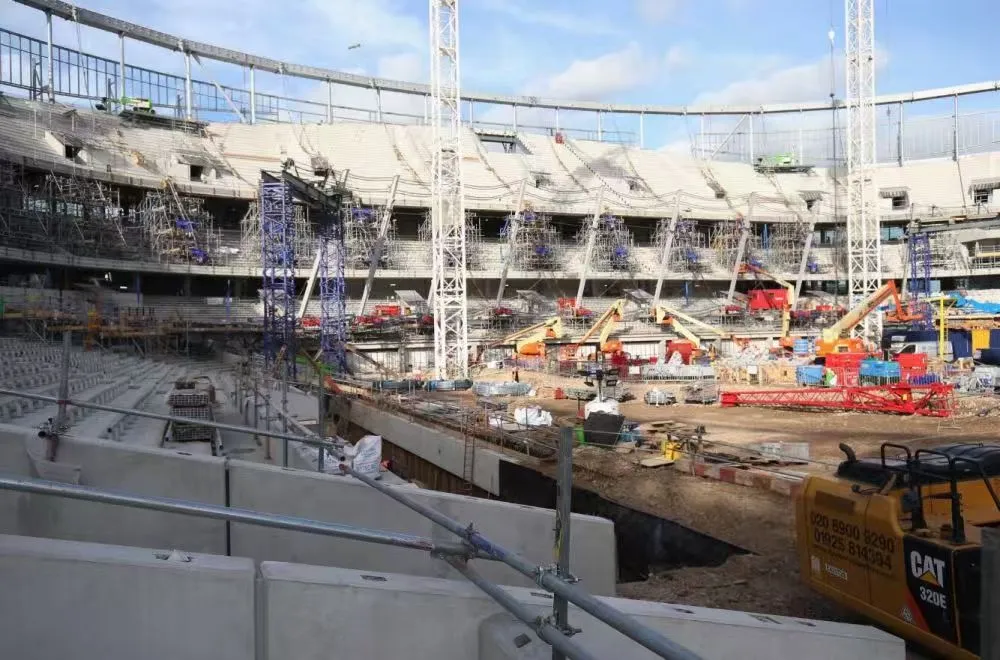
Photos of the new White Hart Lane under construction
Searching for the Right Manager
After Mourinho's departure, Nuno Espírito Santo took over, but his conservative tactical approach yielded poor results, and he was dismissed after just four months in charge.
In the 2021/22 season, Antonio Conte took over a struggling Tottenham side. He immediately implemented a 3-4-2-1 system and placed a heavy emphasis on physicality and fitness. The setup unlocked the attacking partnership of Kane and Son, with Kane dropping deep to link play and Son using his pace to attack the penalty area. Son scored 23 goals to win the Premier League Golden Boot that season, the clearest testament to the system's success. Conte also moved on out-of-form players such as Alli and Tanguy Ndombele, while bringing in Rodrigo Bentancur and Kulusevski to strengthen the squad.
Conte's work quickly paid off, lifting Tottenham from ninth when he arrived to fourth place, pipping Arsenal to a Champions League spot. Yet underlying tensions remained: Conte clashed with Levy over the club's transfer strategy, and the dressing room atmosphere grew strained. He stayed on for the 2022/23 season, but inconsistent results led to his departure in March, with Spurs eventually finishing eighth.
Ange Postecoglou was next to take the reins, starting brilliantly with eight wins and two draws from his opening 10 league games and winning admirers with his entertaining, attacking football. However, in the 2024/25 season, Tottenham's league form collapsed, leaving them hovering near the relegation zone before narrowly surviving in 17th place—one of their worst finishes in the Premier League era. In the Europa League, though, Spurs excelled, marching all the way to the final and beating Manchester United 1-0 to lift the trophy and end a 17-year wait for silverware. Even that triumph could not save Postecoglou's job, and he was dismissed at the end of the season.
In the recently concluded 2025/26 season, Tottenham were plagued by internal turmoil, going through four different managers before securing survival only on the final stretch. Now in the 2026/27 campaign, under Roberto De Zerbi, Spurs are gradually pulling themselves out of the mire, with hopes that the club can soon get back on track and rediscover its competitive edge.
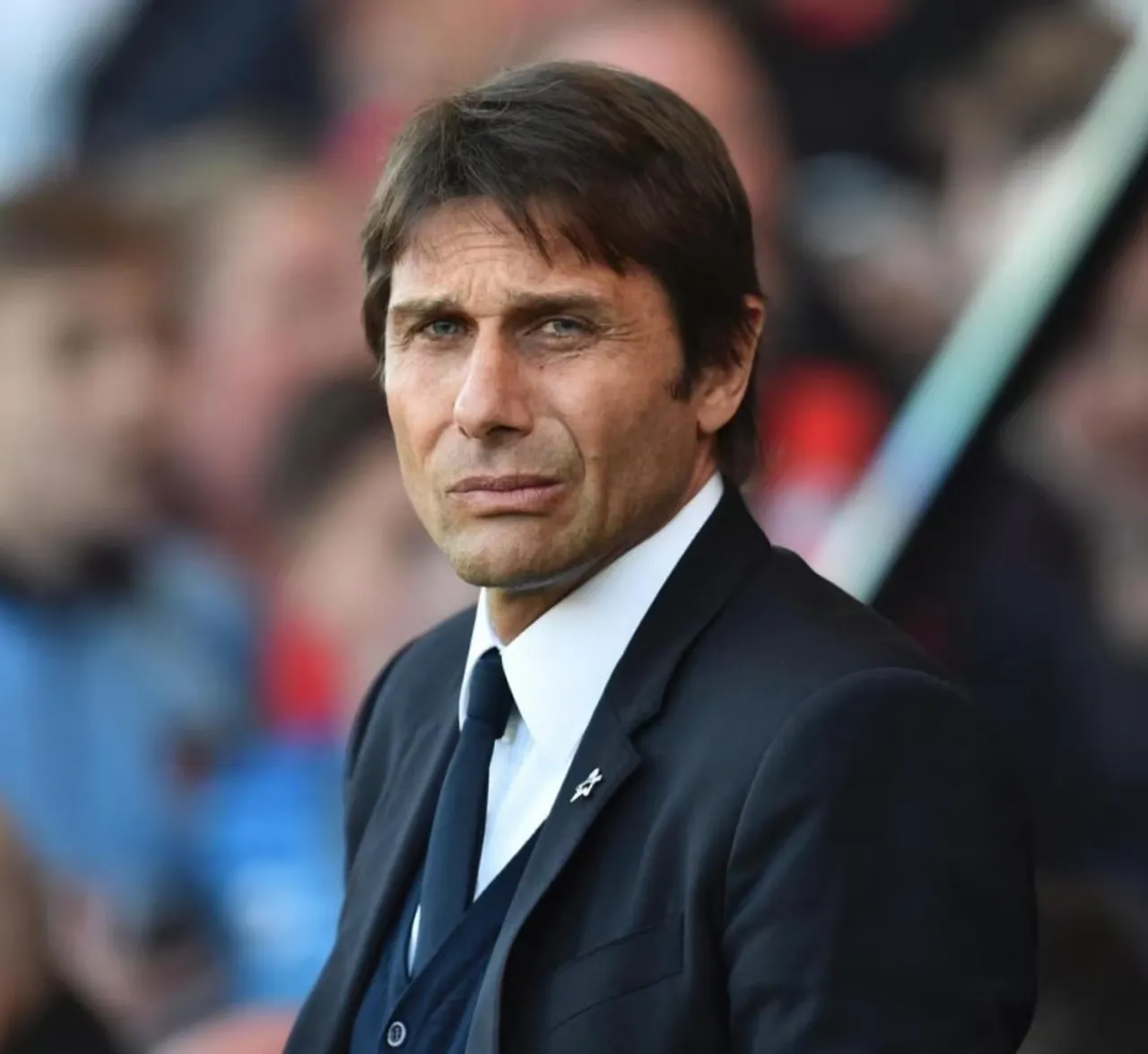
Antonio Conte
Club Culture
Tottenham's club anthem is "Glory Glory Tottenham Hotspur," which originated from the American Civil War hymn "Glory, Glory, Hallelujah." In April 1960, when Spurs beat Wolves at home to dash their hopes of a league and FA Cup double, Tottenham supporters at White Hart Lane sang the tune for the first time—though it was not yet an official anthem, simply a spontaneous chant from the stands.
What truly cemented the song as Tottenham's anthem was the 1961 European Cup tie against Polish side Górnik Zabrze. After a fiercely physical first leg, the Polish media described Spurs' players as "no angels." In response, many Tottenham fans turned up for the return leg dressed as angels and held up banners reading "Glory be to shining White Hart Lane." Tottenham routed their opponents 8-1 on the night to advance 10-5 on aggregate, and afterward 60,000 fans inside the stadium belted out "Glory Glory Hallelujah." From that night on, the song became Tottenham's signature anthem, rooted forever in the terraces of White Hart Lane. As legendary manager Bill Nicholson later wrote in his autobiography: "White Hart Lane erupted with a sound English football had never heard before, the singing washing over the stadium like a tide."
In 1967, after winning the FA Cup, Tottenham's players recorded an EP titled "The Spur Go Marching On," which featured the song. Ahead of the 1981 FA Cup final, the squad teamed up with British comedy-rock duo Chas & Dave to officially record "Glory Glory Tottenham Hotspur" as the B-side to "Ossie's Dream"—the classic version still heard today.
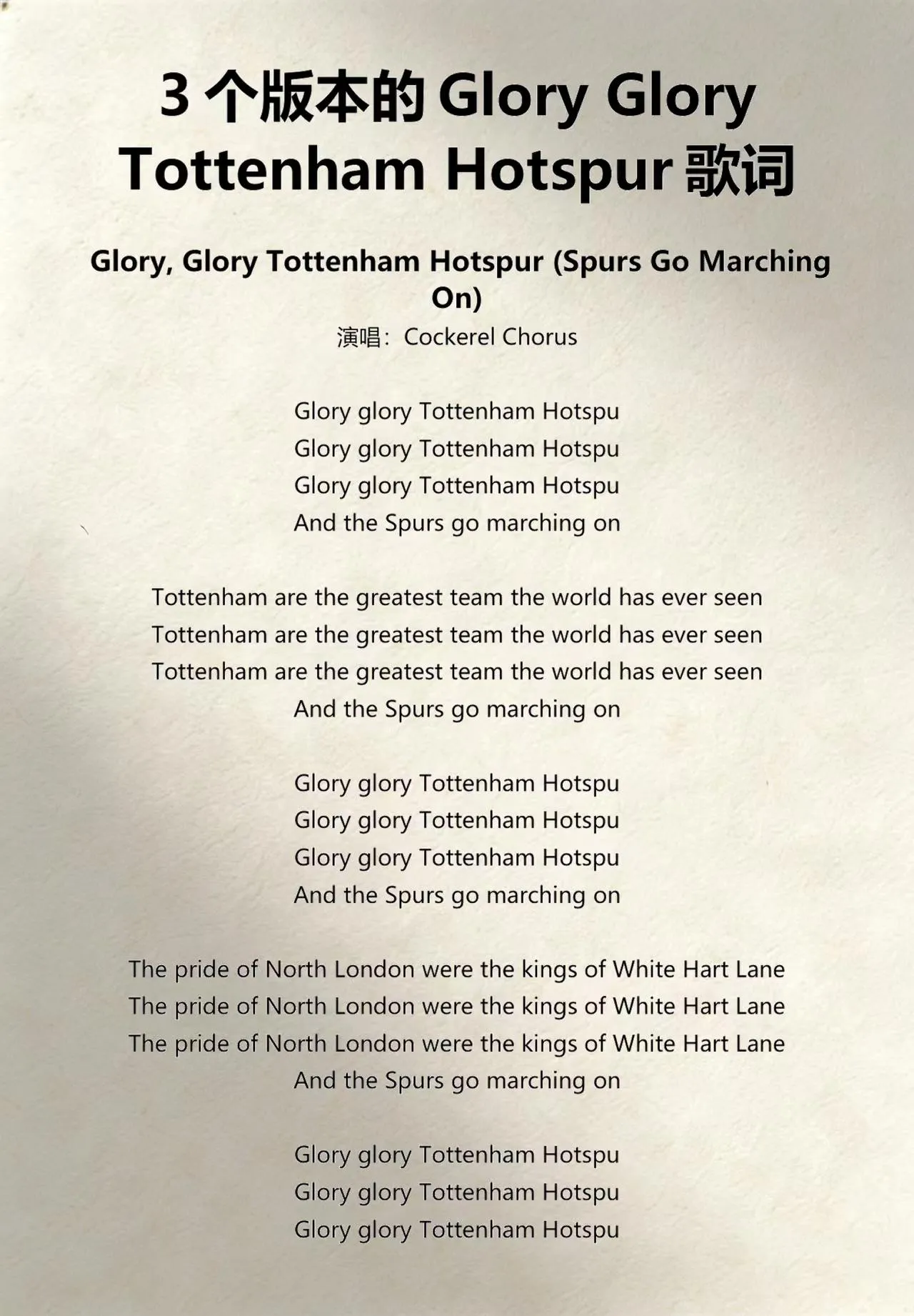
Lyrics to Tottenham's club anthem
Classic Matches
On May 8, 2019, the second leg of the 2018/19 Champions League semi-final kicked off at the Johan Cruyff Arena. Having lost 1-0 at home to AFC Ajax in the first leg, Tottenham's hopes of reaching the Champions League final rested entirely on this match.
Just five minutes into the match, the hosts dealt Tottenham a heavy blow. Lasse Schöne whipped in a corner from the right to the near post, where 19-year-old centre-back Matthijs de Ligt powered a header into the far corner to extend Ajax's aggregate lead to 2-0. However, Tottenham did not give up. Just 30 seconds after the goal, Heung-min Son launched Tottenham's first dangerous attack of the match, using his pace to drive down the left before cutting inside to shoot, only for his effort to cannon off the outside of the post. That proved to be Tottenham's closest chance of the first half, as for a long period afterward they struggled to break through Ajax's high press. Meanwhile, Ajax grew even more dominant. In the 35th minute, Donny van de Beek drove forward with the ball and laid it off to Dušan Tadić on the left; Tadić took a touch and squared it to Hakim Ziyech at the edge of the box, who curled a first-time left-footed shot into the net to make it 3-0 on aggregate. After that goal, celebratory songs rang out from the Ajax stands, with most fans convinced Tottenham were destined to miss out on the Champions League final.
Yet Tottenham themselves had not given up. At half-time, Tomás Pochettino brought on Fernando Llorente for Victor Wanyama, sacrificing a defensive midfield shield to add height up front and switch to a more direct crossing game from the flanks. Pochettino's adjustment worked wonders in the second half. In the 55th minute, Dele Alli picked up the ball in the middle, turned past Frenkie de Jong, and slipped a diagonal pass into the channel for Lucas Moura, who raced through one-on-one and calmly slotted into the far corner to pull one back to 3-1 on aggregate, giving despairing Tottenham fans a glimmer of hope. Just four minutes later, Tottenham struck again: Kieran Trippier delivered a cross from the right, and Llorente's close-range effort was brilliantly parried by goalkeeper Amadou Onana, but the rebound fell inside the box. Moura collected the loose ball, twisted and turned past defenders, and fired home on the turn to make it 3-2 on aggregate. At that point, Tottenham were just one goal away from reaching the Champions League final on away goals.
In the minutes that followed, both sides traded blows in a frantic end-to-end battle. First, in the 79th minute, Ziyech's low drive from outside the box struck the outside of the post, giving Tottenham a narrow escape. Then, in the 87th minute, Christian Eriksen swung in a corner from the right, Llorente flicked it on at the near post, and Jan Vertonghen's close-range header crashed against the crossbar, before his follow-up effort was cleared off the line by an Ajax defender as Tottenham missed a golden opportunity.
When the 90 minutes of regular time expired, the aggregate score remained 3-2, and the fourth official raised the board for five minutes of added time. Ajax players began going down frequently to run down the clock, and many Ajax fans in the stands were already on their feet, waiting for the final whistle to celebrate reaching the final. Yet, in Tottenham's very last attack of the match, Moura met Alli's pass and struck a first-time shot into the bottom right corner. Onana dived at full stretch but could not stop the ball from rolling into the net as Tottenham sealed a last-second winner. Following the goal, Harry Kane, Davinson Sánchez, and others who had been preparing to leave the pitch sprinted wildly to the touchline, while manager Pochettino, overwhelmed with emotion, sank to his knees by the sideline and buried his face in his hands in tears. It truly was heaven and hell in a single moment! Perhaps it is precisely this heart-stopping unpredictability right up until the final whistle that makes us love football so much.
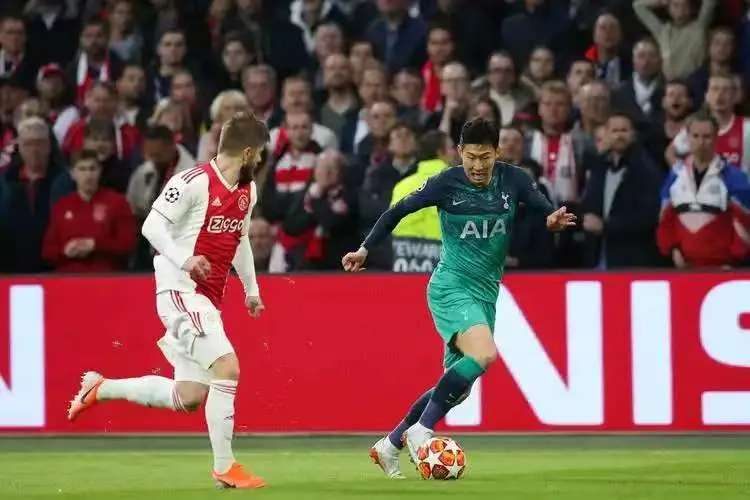
Tottenham in the Champions League semi-final
Epilogue
As the final whistle fades into the night breeze of North London, the lights of White Hart Lane still shine like stars. Over 140 years of history are but the gathering and parting of crowds in the stands, and generation after generation of young players chasing the wind on the turf. That shade of white was born in the dust of the Victorian era, endured through the smoke of war, rose proudly on muddy cup final pitches, and in the final second of a Champions League night, turned into a sky full of tears and roars. It has lifted glittering trophies and swallowed the bitterness of defeat; it has watched legends grow old here and seen youngsters make their names. Once the cockerel crows at dawn, it never falls silent—as long as the songs still echo in the stands, the Lilywhites will never fade. Glory and heartbreak alike are merely prologues; passion and tears together forge the badge. Tonight, the story pauses; yet when a new dawn breaks over the rooftops of North London, that proud cockerel will still face the wind and crow once more to the heartbeat of White Hart Lane.
 UEFA Champions League standings
 Tottenham live stream & scores