All Football
Get the app
Bruno Fernandes extends to 2028, but Man Utd's dilemma remains unsolved
Live StreamsLive scoresTV GuideTop picksOdds
Trivela Column | Commentator: Guilherme Ramos
Man Utd have decided to extend Bruno Fernandes' contract by a further season, until June 2028. This move prevents the captain from entering the final six months of his deal, meaning he cannot negotiate a pre-contract agreement with foreign clubs starting from the January transfer window. It is a move to protect a core asset of the squad, though it does not necessarily mean the Portuguese midfielder is any closer to staying at Old Trafford.
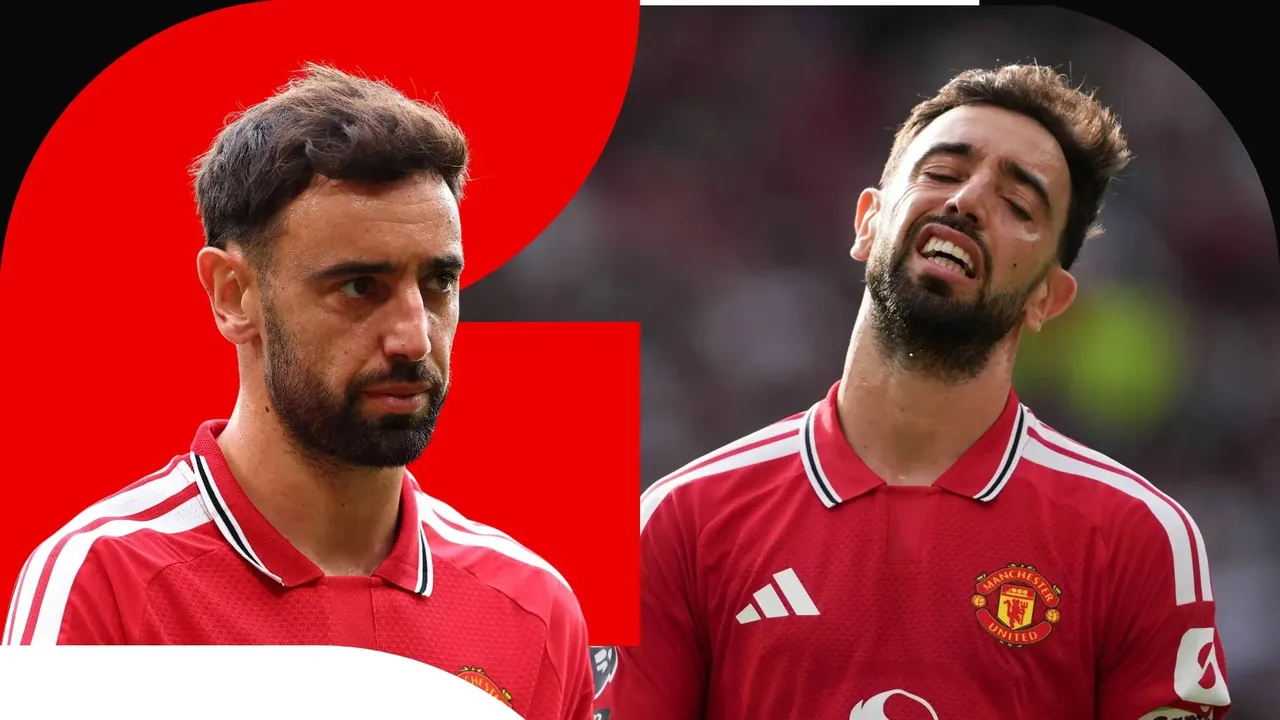
The extension was triggered unilaterally by the club, as the option was already included in his contract. The move comes at a time when talks over a new deal have stalled: Fernandes confirmed he had received a renewal offer, but said negotiations were put on hold given the team's current poor form. The player has also made it clear that he does not intend to stay at Man Utd merely to see out his contract if the board feels it is time to part ways. Therefore, the decision raises a bigger question than the length of the deal: are Man Utd trying to rebuild their relationship with their captain, or simply ensuring they receive a sizeable transfer fee if they decide to sell him?
From a financial standpoint, the decision is understandable. Without activating the option, Man Utd would have risked Fernandes negotiating with clubs outside England from January and leaving on a free transfer at the end of the season. By extending his contract until 2028, the board regains control over the player's future: any interested party will have to negotiate a transfer. This does not mean Man Utd have decided to sell him. The extension also buys time to reopen talks over a longer-term deal and try to convince the Portuguese star to stay. However, the possibility of an exit remains, and the move could also serve as a safeguard for the club if the two sides fail to reach an agreement.
Fernandes has not hidden the fact that the relationship is at a delicate stage. In an interview with Sky Sports, he said he has put contract matters aside because the priority must be turning results around. He also dismissed rumours that he is demanding more money or a longer contract. "If I only wanted more money, I wouldn't be here," he said, reminding people that he previously had opportunities to leave Manchester for more lucrative offers.
At 32, he remains one of the squad's main technical benchmarks and one of its most influential players in creating chances. In a team enduring a turbulent season, letting him go without a clear succession plan would be another risk for a side already struggling to find stability.
Interest from other clubs makes this extension even more significant. Fernandes has been linked with European sides such as Juventus and AC Milan, as well as potential moves to Saudi Arabia. In recent reports, Galatasaray and Al-Ittihad Club have been listed among the interested parties. However, no official offers or advanced agreements have been confirmed.
Since joining in January 2020, Fernandes has topped the club's Premier League charts in several metrics: line-breaking passes, passes into the final third, and ball recoveries. Since 2020, he has created 670 chances, ranking first in the Premier League over that period—238 more than second-placed Kevin De Bruyne.
Extending until 2028 changes Man Utd's position in potential negotiations. Instead of having to accept a cut-price offer to avoid losing the player for free, the club can set a transfer fee and negotiate on its own terms. Therefore, the decision may also be aimed at preserving his resale value for a potential sale in 2027.
However, money does not automatically solve sporting problems. Fernandes is a player with traits that are hard to replace: he provides high creative volume, finds vertical passes, arrives in the box, and possesses the personality to take responsibility in high-pressure moments. His influence also extends beyond his footballing ability, as captain and one of the main voices in the dressing room.
Man Utd need to find someone capable of taking on some of those duties, rather than simply signing a midfielder with similar goal and assist numbers. Replacing him requires investment and planning, and cannot rely solely on the proceeds of a sale. For a club still searching for its identity and trying to compete for titles again, losing one of its main pillars without a ready-made replacement could prolong the rebuilding process.
On the other hand, keeping Fernandes without resolving the contract situation also comes at a cost. If the player is not convinced by the sporting project, a long-term extension could turn an immediate issue into a harder-to-manage long-term commitment. The club needs to give him concrete reasons to believe he can compete for the Premier League and the UEFA Champions League at Old Trafford—targets the Portuguese midfielder has said he is still chasing.
Man Utd's move does not end this saga; it merely changes the starting point. The club has bought time to negotiate, protected its captain's market value, and avoided the possibility of a free departure. As for Fernandes, he is under contract until 2028, but until the team's performances improve, he has shown no willingness to reopen talks over a new deal.
 Premier League standings
 Man Utd live stream & scores