All Football
Get the app
Lucescu's grandson: He died of a heart attack, I wish he had stepped down after the play-off
Live StreamsLive scoresTV GuideTop picksOdds
Mircea Lucescu continued coaching at the highest level until the very end of his life. Determined to lead Romania to the 2026 World Cup, he passed away at the age of 80 just 12 days after a 1-0 play-off defeat to Turkey. Recently, his grandson, Matei Lucescu, gave an exclusive interview to Romanian outlet Fanatik, speaking about the Lucescu family's immense passion for football.
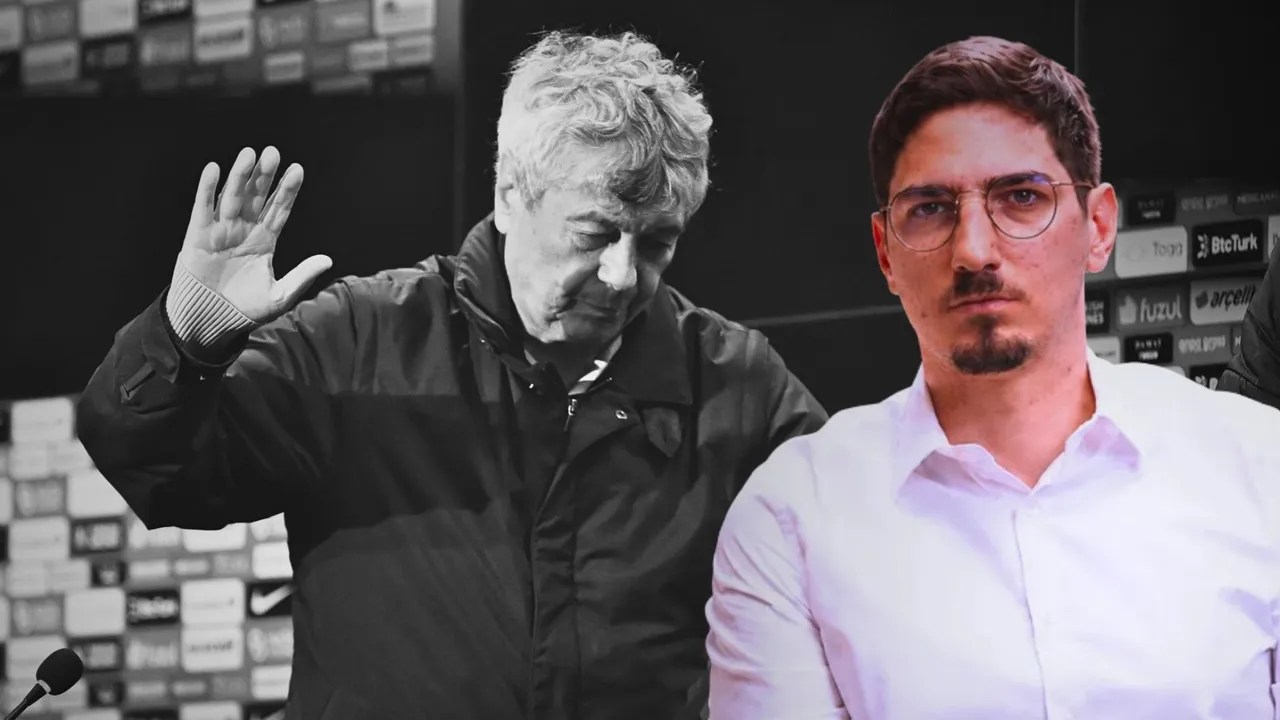
Matei Lucescu revealed that even after falling ill, Mircea Lucescu could not accept not being on the bench for the play-off against Turkey. He also specifically clarified that his grandfather did not have leukemia, and that the cause of death was a myocardial infarction. What he regrets is that Lucescu did not leave the national team immediately after that intensely high-pressure play-off. Below is Matei Lucescu's interview on growing up in one of the most famous families in Romanian sport:
To start from the beginning, tell us about yourself: what was it like growing up in one of the most famous families in Romanian sport, carrying the Lucescu surname?
"You could say people around me had very high expectations when it came to football. As you can imagine, everyone expected me to become a player, a coach, a goalkeeper, or at least someone working in football. I tried it too—if I remember correctly, I played as a goalkeeper until I was around 14. Back then, I trained near the former 23 August Stadium. Later, I gradually realized that if you don't have the kind of burning passion my father has, or the day-to-day love my grandfather had—they woke up thinking about football, went to sleep thinking about football, and talked about football in their free time—if you don't have that kind of burning passion, you cannot achieve anything."
"That's true in any field, not just football. Whether in sport, or if you want to be a chef or a painter, if you don't have passion and don't put your whole mind into what you do, you can't succeed, because it just becomes something you 'have to do' rather than something you 'want to do.' Naturally, at a certain point I told them: 'You know, this isn't for me.' Both my father and my grandfather understood that my path in life wasn't in football. I like football, I enjoy watching it, I follow matches, results, and league news, but I didn't have that urge to become a professional player."
So when you were playing, you weren't passionate enough to want to play from morning till night?
"I often tell a story: I knew a player whose real hobby was fishing. For him, playing football was just a job; all he thought about was going fishing. That stayed with me, and made me feel that if you have a passion in a certain area, you should follow it. Football cannot just be a job, it really can't. It's hard to say: 'Okay, for me this is just a nine-to-five job, and when I'm off the clock, it's over.' No, to truly make a name for yourself, it has to be a passion."
Many sons of famous players or coaches have said that they felt the pressure of their surname from a young age when playing. Did you feel that when you played as a youngster?
"Honestly, yes. Because when your surname is Lucescu, everyone on the pitch expects you to be a star, the top scorer, or Diego Maradona, right from the start. When you're seven, eight, or nine years old, with no experience and just starting out in the sport, the expectations from outside are already very high. That probably did have some impact. But at the same time, I see my nephew playing with total dedication—all he thinks about is football, all he talks about is football—and I notice that those things don't affect him at all. So what can I say, I think it depends on the person."
It certainly depends on the person, and maybe on the environment too, because you often hear people say things like, 'Oh, he can play because his surname is Lucescu,' which can affect your mindset. Just like Ianis Hagi, who faced the same kind of talk: 'He gets to play because he's Hagi's son.'
"Fortunately for me, I never reached professional football. I only played at children's clubs, so I don't know what it would have been like higher up. However, in my own professional field, especially in the early days of starting a business, I did feel very high expectations from the outside regarding our products, our brand, and what we were doing. Maybe because of the family's achievements in football, people naturally expected us to excel in other areas too, so the bar was set very high."
Are you saying that in the beer brewing industry now, you also feel the standards have to be...
"Yes, that's right. First of all, what I feel is a responsibility to maintain high standards. Whether in raw materials, equipment, or brand building, we always position our products at the highest quality. Everything has to meet very high standards, both for our consumers and for the principles we set for ourselves. That is what we truly want to do in our hearts, and it's also the example I saw from my father and grandfather. I've faced high expectations all my life, and now in everything I do and every task at the brewery, I set high standards for myself as well."
Many people are curious: when Mircea and Răzvan Lucescu are both at home, do you talk about football a lot?
"All the time, from morning till night. Whenever they meet, there is no other topic besides football: what they've been doing lately, what others are doing, what news there is, what transfers have happened. They are connected to football every single moment."
Indeed, they have been in football for so long that Mircea and Răzvan Lucescu seem to have almost never had a period out of work.
"Very rarely. However, before he left Dynamo Kyiv and took over the national team, we had a year together, which was a wonderful year for me because we had the chance to go to matches together. We went to all the matches in Bucharest—whenever Dinamo Zagreb or Rapid were playing—every weekend. On Fridays, Saturdays, and Sundays, I was with Mircea watching football. Those 10 months were so good; every weekend that's all we did, and whenever there was a match in Bucharest, we were there."
Would you go regardless of who the opponent was?
"Yes, we didn't care who the opponent was. However, we avoided the derby—when Rapid played Dinamo Zagreb—because then you have to choose a side to sit on, either the Rapid stand or the Dinamo Zagreb stand, and Mircea tried to avoid making that choice. But apart from that, we were at the stadium for every other match."
Around what age did you realize how great your grandfather was as a coach?
"To be honest, it's hard to pinpoint a specific time. I feel like I always knew, because I remember when he was coaching Galatasaray in Turkey, the scenes when they celebrated the league title and the UEFA Super Cup—the streets were absolute madness. I remember I was six or seven years old. We went there often and stayed at my grandparents' house during summer holidays, watching people in the streets cheering for football, for the team's success, and for Mircea. So it's hard to say there was one specific moment of realization."
There was also a very special moment when Mircea Lucescu and Răzvan Lucescu faced each other in the Europa League (UEFA Cup). What did that family showdown feel like for you?
"Looking back now, I think it was much more special than I realized at the time. In 2005, I was only around ten years old, so it's hard to say I fully understood the weight of that moment back then. I went to the stadium to watch the match, but I didn't completely grasp what was happening. Looking back today, I can appreciate the significance of it much more, as well as the achievement of father and son both reaching the group stage and competing against each other."
"I remember Rapid had a very strong team back then, with some of the greatest players in the club's history. Historically, that was also one of Rapid's best results—two Romanian teams reaching the UEFA Cup quarter-finals together. It was a dream season, and I still feel very happy thinking back to that time. Back then I was just a kid with normal kid thoughts, but those matches remain cherished memories for me."
"Very nervous—every time I watch a match, I get emotional. If I can't watch it live, for example now that I'm in Qatar and it's not very convenient to watch the games, I just stare at LiveScore and refresh it every three minutes to see what's happening on the pitch."