All Football
Get the app
Gazzetta: 10 years after the Chapecoense tragedy, where the survivors are now and the bond with Torino
Live StreamsLive scoresTV GuideTop picksOdds
On the night of November 28 to 29, 2016, the plane carrying the Brazilian team crashed in the mountains near Medellín. According to La Gazzetta dello Sport, Jakson Follmann eventually sang those lyrics: "How is everything up there? I haven't heard from you in a long time. Say something, your voice is so quiet. I know right now you must be amazing the angels with your laughter." The song was not written by him, but by renowned Brazilian singer-songwriter Gustavo Mioto, who gladly lent it to Follmann. Years earlier, Follmann was an outstanding player on the pitch until he lost his teammates, coaches, and management. Forced by reality, Follmann fulfilled another dream: his Plan B in life was to become a singer. Ten years ago, his Plan A was shattered along with the engines of LaMia Flight 2933 carrying Chapecoense - SC.
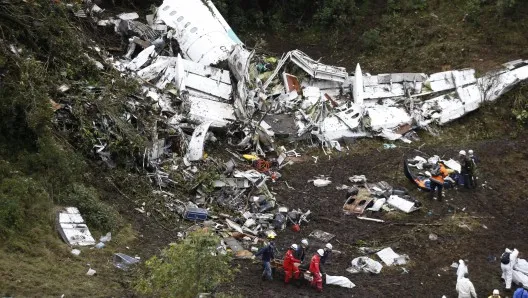
The Medellín plane crash
It was the night of November 28 to 29, 2016. Brazilian newspapers were busy preparing their sports pages when they were shocked to learn that Chapecoense - SC had made the general news section—with tragic news. Though small, the club had already made history: ten years earlier they were struggling in the fourth division, and now they were traveling to Colombia for their first-ever continental final, the Copa Sudamericana final against Atlético Nacional. The trophy did eventually stay in Brazil, but there were no celebrations, only tears of grief, as Atlético Nacional decided to concede the title to the opponents they never got to face.
Fate had very different plans: on that late November night, a Bolivian LaMia Airlines plane crashed into a mountain near Medellín. There were 77 people on board traveling with Chapecoense - SC: 71 of them died, including 19 players, 14 coaching staff members, 9 club officials, 20 journalists, 7 crew members, and 2 guests.
How the tragedy unfolded

Chapecoense - SC fans holding up club scarves
Before that nightmarish evening, Chapecoense - SC were already a legend despite their modest size. They hailed from Chapecó, a city of fewer than 300,000 people in the southern Brazilian state of Santa Catarina, about 550 kilometers from the state capital Florianópolis and 800 kilometers from São Paulo. To reach the Copa Sudamericana final, the team chose to fly out of Bolivia because it was more cost-effective, and they scheduled a 3,000-kilometer direct flight without refueling, as everyone was convinced the reserve fuel would be more than enough. After all, it was not the first time these charter planes had flown the same route with such tight fuel margins.
However, on the evening of November 28, another plane declared an emergency and was granted priority landing in Medellín. LaMia Flight 2933 had to circle in the air, waiting anxiously as its remaining fuel fatally ran dry. By the time the pilots issued an alert, it was already too late: the plane's four engines shut down one after another, followed by a complete loss of cabin power. At 21:59 local time, the aircraft crashed into Cerro Gordo, a mountain 2,600 meters above sea level and 18 kilometers from the airport runway.
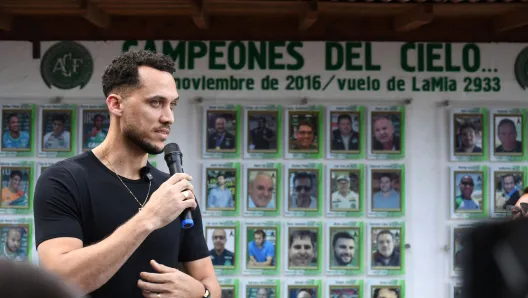
Speaking in front of the Chapecoense - SC plane crash memorial wall
The bond with Torino
Chapecoense - SC had fought their way through, knocking out much bigger clubs: they beat Independiente in the round of 16 and, most notably, eliminated San Lorenzo in the semifinals thanks to a last-second save with his foot by goalkeeper Danilo. The first-choice keeper was pulled from the wreckage with vital signs, but he ultimately passed away in the hospital, having only had time to make one final phone call to his wife. Just weeks earlier, after the semifinal, head coach Caio Júnior had been overwhelmed with joy: "I am so happy that if I died tomorrow, I would leave with a smile. I have gotten everything I wanted from life." Fate fulfilled his words in the cruelest way.
His son was supposed to sit in the seat next to him on the plane, but was spared because he had forgotten his passport at home. The tragedy shocked the world and plunged Brazil into mourning: three days of national mourning were declared, and the Copa Sudamericana title was subsequently awarded to Chapecoense - SC. The Colombians' gesture was deeply moving, yet the grief remained suffocating. That pain crossed the ocean, touching the hearts of those who knew all too well how agonizing such a tragedy is. That is why Torino immediately stood by Chapecoense - SC; on the first anniversary of the crash, Torino wore green kits in tribute to Chapecoense - SC's primary colors.
The Brazilians also visited and hosted a Torino delegation, honoring them with a garnet-colored goalkeeper shirt. A bond was born in tears: brothers in grief, made stronger in remembrance.
Where the survivors are now
There were also those who escaped fate's cruel twist and survived. For instance, flight technician Erwin Tumiri, who five years later survived another bus accident that claimed 21 lives. Five other miraculous survivors made it through that night. Flight attendant Ximena Suárez returned to her job. Radio journalist Rafael Henzel went on to commentate on a charity match between Brazil and Colombia, with all proceeds donated to the victims' families, though he passed away in March 2019 from a sudden heart attack while playing football with friends. Three players also survived.
Alan Ruschel was the only one to return to the pitch: his comeback match was against Barcelona at Camp Nou, where the rebuilt Chapecoense - SC were invited as special guests to celebrate his return. Ruschel spent ten years moving between Brazil's first and second divisions before officially retiring a few weeks ago. Hélio Neto suffered multiple severe injuries and tried to return to the pitch to forget everything that happened on that plane, but eventually gave up because "the pain outweighed the joy of playing." Finally, there is Follmann. The team's second-choice goalkeeper, who had his right leg amputated, once dreamed of competing in the Paralympics. Later, he decided to pay tribute to his teammates through music.
A line in the song Gustavo Mioto lent him goes: "I finished reading the book you recommended. It wasn't until page 70 that I understood your heart, where it was written that love is an invisible yet burning flame." The love for Chapecoense - SC is even stronger than the pain.
 Brazilian Série A standings
 Serie A standings
 Chapecoense - SC live stream & scores