 All Football
Get the app
Sport: Former Barça Youth Keeper Rubén Miño Cycles Nearly 1,000km Across the Pyrenees After Retiring
Live StreamsLive scoresTV GuideTop picksOdds
According to Sport, in late September, Rubén Miño wasted no time in hopping on his mountain bike and heading straight for the Costa Brava. He was not there for a swim in the sea or a leisurely stroll, but to embark on a nearly 1,000-kilometre route crossing the Pyrenees from one end to the other.
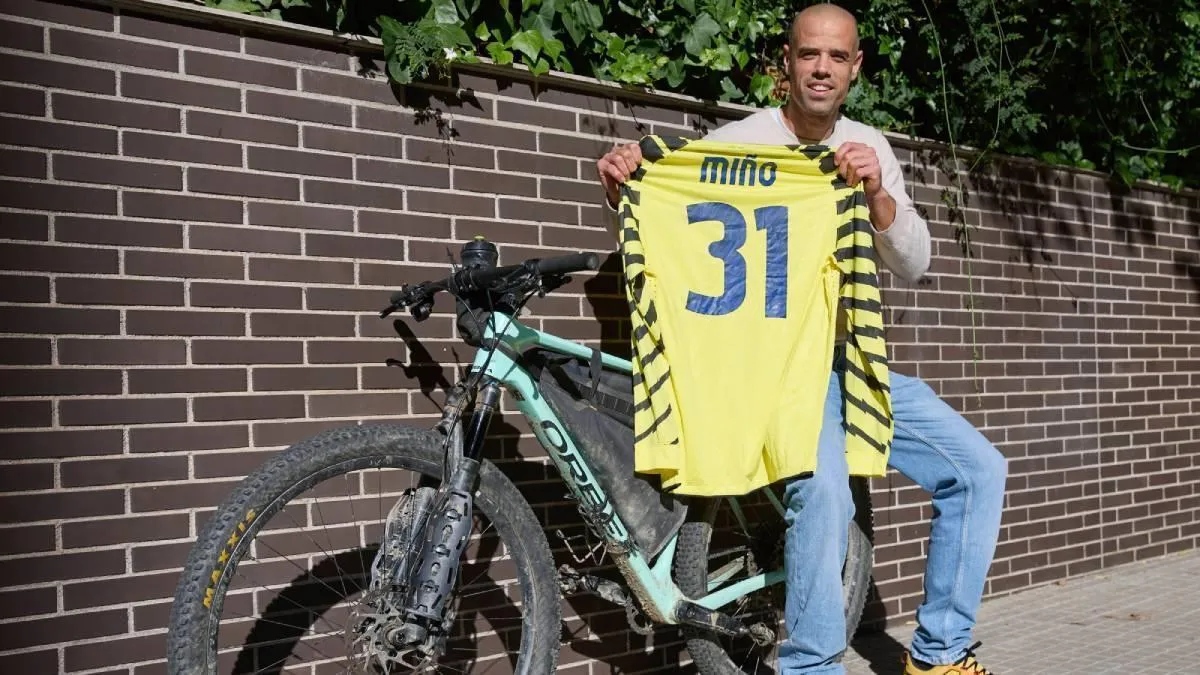
After just a few weeks of training, the former UE Cornellà player set off with determination. Packing panniers, a few pairs of underwear and socks, a tent, and survival essentials onto his bike, he braved the wind, cold, and rain alone for more than two weeks. After ending a long and fruitful professional football career, it was a true personal challenge.
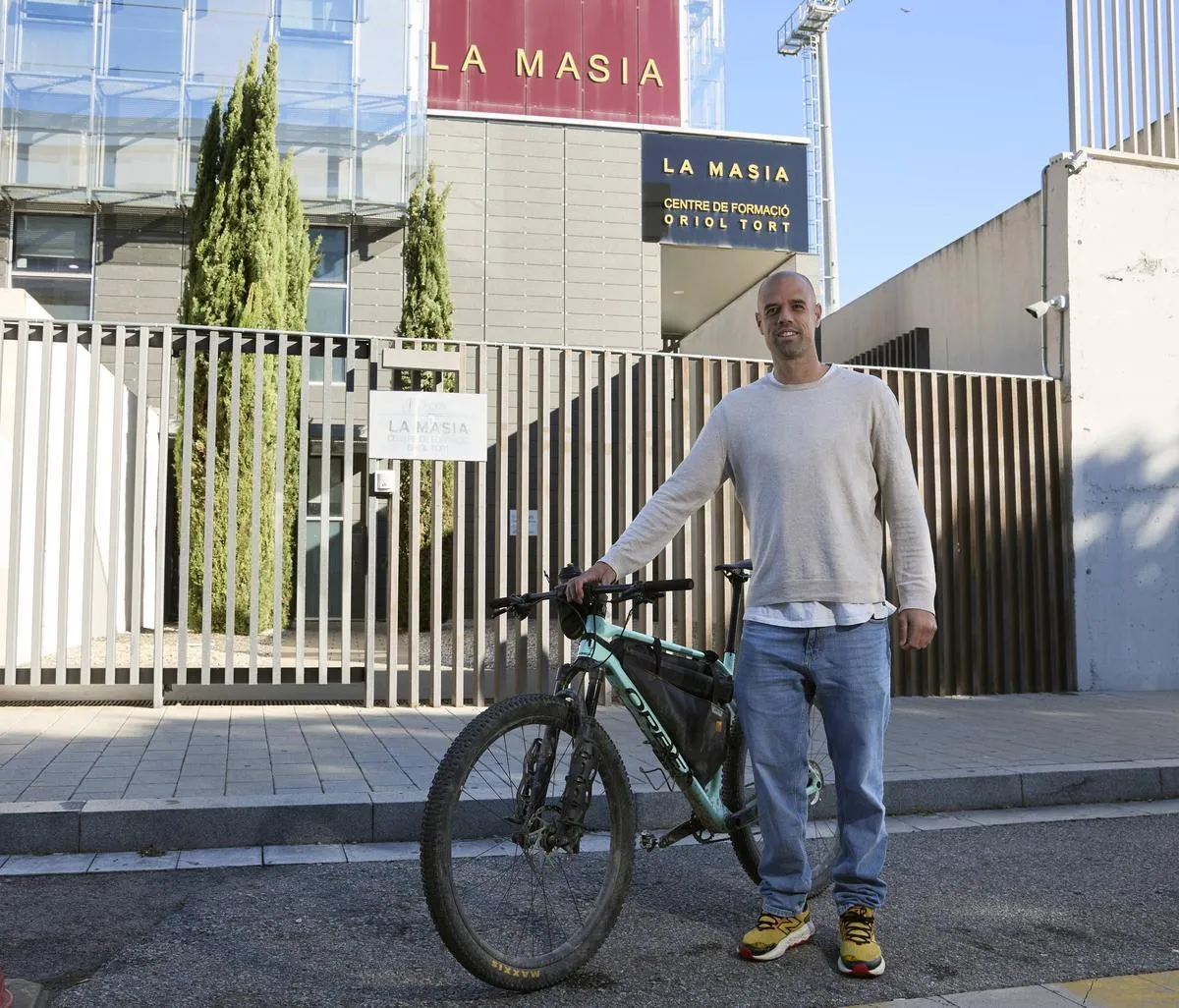
Miño ended his playing career at UE Cornellà, the very club where he kicked his first ball. He spent many years at Barcelona, and his trophy cabinet holds a 2010 Champions League winners' medal and a Club World Cup winners' medal. He used to face Ronaldinho in training, experienced Lionel Messi's brilliance firsthand, and came of age in that legendary Barça B side coached by Luis Enrique.
Rubén arrived to meet us on the very bike that accompanied him through the hardships of the Pyrenees, and he also brought a prized keepsake: the shirt he wore when he made his Barcelona debut under Pep Guardiola in the 2010 Spain - Super Cup.
What does it feel like to step back after doing the same thing your whole life?
There is always a bit of fear. These first few months are tough because you are so used to your daily routine, training, the dressing room, and that everyday atmosphere. That is also what I miss the most, because you no longer have it: you are no longer in the rhythm of a team and that line of work.
Football took you to many cities, especially in recent years, moving around Europe and Spain on one-year contracts. I imagine that kind of internal instability for your family and so on is complicated, right?
It is exciting. Unlike La Liga contracts, deals in the Segunda División, lower tiers, and abroad are shorter and very unstable, but that brings passion to your life. Sometimes I really liked it because choosing different places changes your life dramatically and lets you quickly get to know very different places. Honestly, I wouldn't change that part of my career.
Mentally, do you prepare for this transition and what comes next?
It is something people talk about, and you have teammates so you know it is a delicate moment in life, but until you go through it yourself, you don't realise what the reality is like. It is hard because for many years we did what we loved, and now we have to find the next step in life, and it is hard to find something as fulfilling as playing football—that passion of competing every day and the daily routine. I don't think anything compares to it. Maybe staying in the circle as a coach gets close to that feeling, but in normal life you don't find all those emotions you get in football. So it is tough. Right now I am finding my feet and running around trying to figure things out.
Are you sure you won't work in something football-related, or have you ruled out certain options like coaching, working in an office, or becoming an agent?
I am right in that searching phase. I haven't ruled any of those out at all, because at the end of the day it is the field I love. I have also studied for it: I completed a Master's degree in Sports Business Management. I also have a Law degree, so maybe I can approach it from another angle, but I haven't decided yet because there are many things I like and feel capable of doing. I am thinking it over; I don't want to make a mistake.
After leaving football, it was time for other challenges, like the Pyrenees cycling crossing you completed at the end of summer and start of autumn. Tell us how that started.
Anyone who knows me knows I like doing these kinds of sports-related challenges. I really enjoy them, and in this case, I had some unfinished business, so I decided to do a bit of physical preparation after dropping the kids off at school. I suggested it to my brother, but the timing didn't work for him. So I went alone. To be honest, I didn't prepare much: I trained for three weeks and set off, and it turned out great.
What was the day-to-day experience like, with the stages, the elevation gain, and facing difficulties alone on the road?
Very beautiful, and very tough. You realise you are capable of pushing past your limits. I broke all my own records: I had never ridden at that frequency and intensity before. Previously I had never gone over 40 kilometres, whereas this time I rode more than 70 or 80 kilometres a day, with over 2,000 metres of climbing, carrying 22 kilos on the bike, for 16 consecutive days without stopping. I got through every single day. When you push beyond yourself, that feeling is wonderful.
Some say that because you come from elite sport you already have a big advantage, but in reality this has nothing to do with what you used to do.
Nothing at all. It is mainly a mental test. Aside from having a decent level of fitness, you have to be fully prepared mentally, because when I was alone, I had moments where my spirits dropped and there was no one around to encourage me. That was the hardest part. I had done some things outside of football before, but at the end of the day I was a goalkeeper, and I didn't have that kind of endurance requirement. Still, I overcame it in the end.
Do you have other challenges in mind? Do you want to use this new chapter to do those things?
Yes, I have many interests. Now I want to try ski mountaineering. Whenever I get the chance, I also go mountaineering: I have done a few routes and climbed a few 4,000-metre peaks, and I want to keep investing time in that too.
Let's talk more deeply about your career. Not long ago, a documentary came out about the period when Luis Enrique coached Barça B to promotion. I imagine that reunion must have been very special for all of you, getting back together and reminiscing about the memories shown in the documentary.
Yes, it was just recently. A few of us got together at a farmhouse. Actually, we still see each other quite often—we have a WhatsApp group and meet up from time to time—but that gathering was lovely, and Luis Enrique was there too, the man who led us through that glorious period. Many of us in that team, if not for him and the collective success we achieved, might never have become professional footballers or played in the football world for so many years. I think many of us look back on those years with deep affection.
We'll talk more about that B team later, what you achieved, and what it meant as a springboard for some of you. You arrived at La Masia to join Barcelona at around 11 years old.
I first represented Barcelona at the Brunete tournament, which was held at the end of the alevín season. I don't remember if I was 11 or 12 at the time, but that was my first connection with Barça. That Barça side had Jordi Alba, who was the best player in the team. There were also Víctor Ruiz and Víctor Rodríguez, who later played in La Liga as well. I spent three years in the academy first, and then two years in the youth team. All in all, I was there for nine years.
Do you remember how your parents reacted when Barcelona called you to come play for them as a kid?
The person who signed me was Sergio Lobera, who has just taken over as coach of AD Ceuta. I always treated football as fun; back then you never imagined reaching the top level for your age group. I didn't live at La Masia; instead, I took a taxi to training—they would pick me up and take me to the training ground. It was a wonderful time, because you can imagine how excited a 12-year-old kid is to play for that club.
Alba was like the leader of your generation. Later he had to leave for UE Cornellà, then went to Valencia, and finally returned to Barcelona. When you left, he left the following year too.
Because the coaching staff didn't count on him at the time. He was a bit small back then and wasn't rated highly enough in the team, so he went to UE Cornellà. And then from there, Valencia signed him. I don't remember if he spent one or two years at Cornellà—I think it was two—and then he went to Valencia.
In your case, you were loaned out to UE Cornellà.
They wanted to loan me out, but I thought it was better not to go on loan. Later they re-signed me. In Matchday 5 of the División de Honor, I had a great game against Barcelona, and Carles Busquets pulled me aside and asked: 'Kid, do you want to come back to Barça?' I said yes.
You spent two years at UE Cornellà—it was your second year there—and then you returned to Barcelona as a second-year youth player. From that moment on, you established yourself, right?
Yes, after that I spent two years in the youth team. Back in those days, it wasn't as easy to move up to the first team or the B team at a young age; nowadays everyone goes up very young, but I spent two years in the youth team and didn't make the step up to Barça B until Luis Enrique's first year in charge. It was really tough.
In Luis Enrique's first season in Segunda B, you didn't get promoted, but in the second season you succeeded—the legendary promotion you recently reminisced about. What was that team like? More importantly, how do you remember your first contact with Luis Enrique, who was still a rookie coach just starting out?
Fun fact, the first time I heard about him was actually related to cycling. I read an article about him riding a bike in the Marathon des Sables, right after he had finished his coaching badges. Later the club announced he would be the Barça B head coach, and he came to watch a few of our Youth Copa del Rey matches when we were reaching the semi-finals. For me, he went from being an idol for die-hard Barça fans and a player with huge personality to becoming my head coach. It was an incredible leap, and I feel so lucky to have experienced it firsthand.
In that B team, he tried to blend more experienced players with young talents coming up from La Masia like you, Thiago Alcântara, Marc Bartra... How do you remember that bedding-in period? I believe you had a bit of a rocky start.
Yes, in the first year we had a tough start, a terrible opening. It was a completely new team, freshly promoted from the Tercera División, with only a few players from the promotion squad kept on. The beginning was very difficult—he mentioned it in the programme too, and it was the same for me. After all, it is hard for a goalkeeper to establish himself at that age. It wasn't easy; you are no longer a youth player, and it took me a lot of effort to adapt. But then came a great performance: I remember a match where I saved two penalties, and from then on the team's momentum changed. We had lost the week before, and that week we won thanks to that display, and that was when I cemented my place in the team. Everything came step by step, because playing under Luis Enrique was tough—he was very demanding with goalkeepers. For me, he was a pioneer in demanding that goalkeepers play out from the back, and even though I had always been at Barça, I had never been pushed that hard on my footwork before.
That is interesting, because nowadays people take it for granted that a Barcelona goalkeeper must have great footwork, but it wasn't actually a tradition from that long ago, was it?
It was a completely new concept back then. Before that, Barcelona focused on possession, of course, but there hadn't been the huge evolution we see today, where the goalkeeper is the first initiator of the team's attacks. It wasn't like that then—not even Guardiola demanded that much in his early days. It was the result of an evolution they drove together: Guardiola in the first team and Luis Enrique in the B team.
When you moved up to the B team, how do you remember that experience? Did you occasionally train with Pep Guardiola's super first team back then?
Yes, quite a few times. I went to the Club World Cup while I was still playing in Segunda B. Playing at the Club World Cup under Guardiola was my first experience spending 10 days with the first team. I went as the third-choice goalkeeper. Then the following season, I made my debut at Sevilla. That year the team had a lot of injuries: Víctor Valdés was injured, and José Manuel Pinto played a few games. Several times I was included in the first-team squad and trained with them regularly.
At the Club World Cup, you could really feel that atmosphere, couldn't you? The first team was right there within reach, yet you also knew you still had a long way to go. How did you feel at the time? Did you have to keep your emotions in check?
Yes, to be honest I have always kept my feet on the ground, which helped me manage my emotions and my career well. Because it is true that when you are young, you think you are ready to make that step, when in reality you are still far off—and football is like a rollercoaster. There are injuries and unexpected situations beyond your control. For example, I signed a three-year contract with RCD Mallorca in La Liga as a key part of the club's plans, but in the first year we were relegated. Suddenly you are no longer a La Liga goalkeeper, you are a Segunda División goalkeeper, and everything changes. I think keeping a clear head and staying grounded is crucial, and I believe I always managed to do that. In fact, until I moved up to Barça B and we got promoted to Segunda, I didn't think I would be able to make a living from football the way I eventually did. I kept studying and always gave myself a backup plan, because you never know what will happen and life is long. As I said, being a footballer is like riding a rollercoaster.
When you went to the Club World Cup with Guardiola and integrated into the first team's daily rhythm, what was training like? That was a terrifyingly good team—you must have realised you were inside a finely tuned machine.
Honestly, I still remember it today and wish I had been a little older at the time so I could have enjoyed it even more, because it is only later that you realise how hard it is to be there. I was lucky enough to have that. I remember many funny moments from the Club World Cup, and I even experienced a Champions League final up close. Those are very rare experiences; many great players never get to experience them, and I was fortunate to live through it all.
What was it like making your Spain - Super Cup debut under Guardiola in 2010?
It was incredible, simply unbelievable. On Thursday, José Manuel Pinto got injured, and Víctor Valdés wasn't with the squad because he had just played in the World Cup. Pinto's injury meant he couldn't make the match. I remember that night and Friday, I kept thinking: 'My God, it's either me or Oier (Mikel Oyarzabal),' because we were the only two goalkeepers. Then you can imagine how it feels when they tell you that you're starting: you've fulfilled a dream, the dream of any footballer, any kid. And I really remember, my God, that huge shift from being completely unknown to being stopped and recognized by people when going to the beach that summer.
After that debut, you said you always kept your feet on the ground, but did you ever think you might get more chances in the first team and that your situation might take a leap forward?
You're there, training with that excitement, and you don't lose that hope. But the problem is, you realize it's very difficult because you have two very good goalkeepers ahead of you who have been there a long time, and there's probably no room for you. I went through the third-choice goalkeeper phase at a very young age, and even though when you're young you think you're ready, the reality is you're not. I think a goalkeeper's maturity comes from making mistakes and learning from them. A 20- or 21-year-old goalkeeper is still too young; very few are ready at that age. That's why I say it wasn't until I was 25 or 26 that I reached my best level in terms of consistency and all the aspects required of a Barcelona goalkeeper.
You mentioned that Champions League final to me before, when because of the volcanic eruption and flight restrictions, you spent 10 days at Arsenal's training ground preparing for the final at Wembley.
Yes. I had just had a very good season, and that experience was a fitting finale. Pep Guardiola called me up, and we lived in almost complete isolation at Arsenal's training ground; being able to experience all of that firsthand was fantastic. What impressed me most was how calm everyone was facing the match: during that time before the game, the players were so relaxed it was as if nothing big was happening. I think they had so much confidence in themselves that it wasn't anything special for them. As for the result of the match, everyone knows how it turned out.
I also wanted to ask you about training, since in training you were facing the best attacking players of that era. What was it like keeping goal in such demanding sessions?
I have never felt the kind of pressure I felt in training during that period. The reality is you had to train with extreme concentration, because if you didn't give 2,000%... you had to keep up with everyone's pace, because your teammates took the small-sided games very seriously, and if you didn't perform well, the teammates on your side would be very unhappy with you. You had to push yourself to the limit. That makes you grow a lot.
You had to learn to process that pressure yourself, right? Not let it affect you.
You had to show your highest level, so I feel I improved a lot in those years. When I went to RCD Mallorca, my God, I was already a much better goalkeeper than before, because I had been training with the first team for three years. And in the reserve team there were also very good players: at that time there was Thiago Alcântara, Víctor Vázquez, Nolito. You had to reach that level, otherwise you'd be dropped... those were truly rewarding years.
There has always been a story that Lionel Messi would stay behind for hours during training practicing free kicks and shooting non-stop. I imagine you goalkeepers 'suffered' quite a bit then too.
Yes, of course. For a period, I often practiced free kicks and had to stay behind after training for extra sessions. I also remember even earlier with Ronaldinho. I once did an individual extra session with him, which was equally impressive. That was earlier, during my youth team days. With Ronaldinho, it really was one-on-one; whereas with Messi, there were other teammates who stayed behind to practice shooting. It was an incredible experience.
I didn't know about the Ronaldinho thing. When you were still in the youth team, did you go train with the first team? Why did they pick you guys like that?
During a certain period, he was recovering from an injury, and when the first team had to travel for a match, the club would call up a goalkeeper to act as a sparring partner, so they'd pull someone from the youth team. I trained with him a few times.
That's interesting. At Barcelona B, the second season was a bit strange—the three of you goalkeepers rotated.
Yes. In the first year, I played all the matches; in the second year, Oier and I each played two games; in the third year, the coach rotated us somewhat arbitrarily, and in the end I played 15 games, Oier played 15, and the rest were played by Jordi Masip, I think.
How did you guys cope with that situation mentally?
It was very difficult. When he thought we should play more short passes, he'd do that, and if you kicked too many long balls that day and the team didn't play well as a result, he'd drop you. That was the criteria back then: constant trial and error. For example, I was called up to the first team for certain situations. You'd be playing well in the B team, then you'd go to the first team, and when you came back you couldn't get into the team anymore, sitting on the bench for a whole month. That's very hard to adjust to mentally, because at that age I was going through this on-and-off playing situation, and honestly, it felt awful. Later you gradually get used to this kind of life as a goalkeeper, but not playing never feels good.
Then in 2012, you joined Mallorca, right? I don't know if your contract with Barcelona had expired by then. What were the circumstances of your departure?
Actually, Mallorca wanted to sign me the year before, right after I finished playing with the U21s, and they were very sincere about it. But I spoke with the club and with Andoni Zubizarreta, because I still had a contract, and he convinced me to stay, saying I would have opportunities at Barcelona. Then not long after, Pinto renewed his contract, and you realize you're not going to stay there and the club isn't going to bet on you. Fortunately, Mallorca maintained their interest in me, and the following year I left on a free transfer. However, by then Mallorca had already signed another goalkeeper, so the year I joined there were three goalkeepers in the squad, which was completely different from going the first year. That's just how luck goes. And that year we also got relegated; I only played two games, it was a tough situation, and Mallorca had a lot of good goalkeepers at the time.
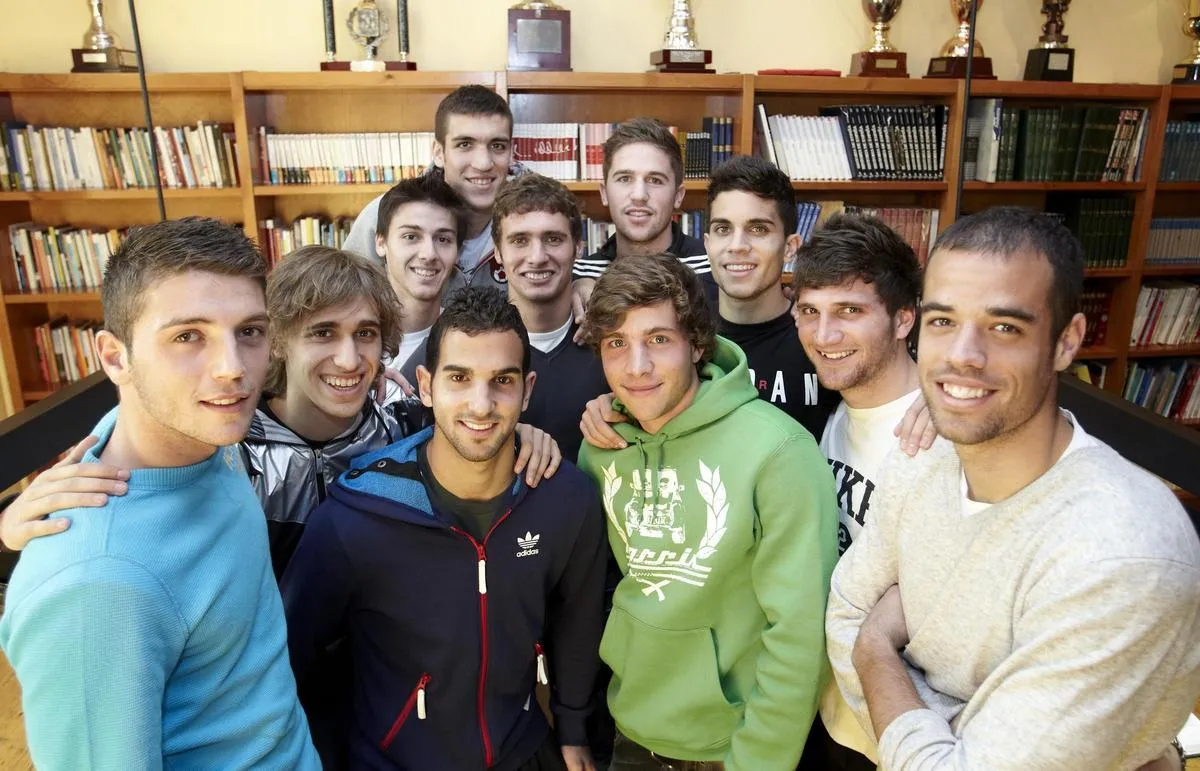
During your development, or among the teammates you shared a dressing room with at La Masia, was there any talented player you were convinced would make it to the first team, but for various reasons never did?
I was in the same generation as Giovani dos Santos. He made it, and everyone could see back then that he would. Iago Falque was very good at the time. And Víctor Rodríguez—I think Víctor Rodríguez. He was the best in our age group, but he was too small and thin back then. As for someone who didn't make it, I almost thought of Jordi Alba, but he made it later on too.
After those three years at Mallorca, your career really entered a phase of frequently changing clubs.
Yes, a bit. In the football world outside La Liga and outside the top clubs, this kind of instability is very normal because contracts there are shorter. On top of that, I suffered an injury that directly interrupted my prime. When you're no longer 20 or 22, a lot depends on whether the team is functioning well as a whole, whether you stay injury-free, and whether you can play 40 games; otherwise, your appearances become sporadic. That said, I left with fond memories from many places.
Is there anything in your career you regret, or any decision you regret making?
I did make some unwise decisions. When I came back from Cyprus with an injury, I had the chance to go to Huesca, but I went to Albacete instead. In the end, Huesca were promoted to La Liga, while Albacete stayed in the Segunda División. At the time, I saw that Huesca's goalkeeper was Álex Remiro, who was very good, and I felt the competition would be fierce. But maybe if I had chosen Huesca then, I would have been playing in La Liga the following year. The same thing happened when I went to Cyprus: I also had the chance to go to Levante, but I didn't make up my mind because, from a sporting perspective, I wasn't sure how much playing time I would get at Levante. In the end, Levante were promoted to La Liga, while I was in Cyprus, away from the spotlight of the major leagues. It was a good experience, but ultimately different. These are all choices one makes.
I haven't asked you about Valdés yet, who can be considered the benchmark for you goalkeepers promoted from Barcelona's academy. But after Valdés, there hasn't been another homegrown goalkeeper who managed to establish himself at Barcelona.
Because it's too hard. Ultimately, when you're young it's very difficult to withstand Barcelona's high demands, because a young goalkeeper always makes a lot of mistakes—he's in a development phase, whereas Barcelona demands immediate results from the very first minute. That situation is hard to repeat. I remember watching Valdés play when I was a kid: in his first few years, he received a lot of criticism because, although he was very good, his playing style was impulsive, so he made mistakes too. Many people criticized him, but he was able to endure it and persevere, because at the end of the day he really was that good, and the coaches knew it, so he got the chances a goalkeeper needs again. I think it was his strong mentality that sustained him at that level for so many years.
What do you make of the fact that no homegrown goalkeeper has been able to establish himself for such a long time?
Because Barcelona have always had very good goalkeepers who can play for many years, and for various reasons, they often come from outside, like Marc-André ter Stegen. Without an opening for a change caused by poor form or injury to the first-team goalkeeper, it's hard for those conditions to exist. Maybe there really wasn't the right person ready at the time, but the main reason is still that there was a goalkeeper firmly holding the starting spot above, leaving no room for anyone else, so the others had to leave. Ultimately, I think the gap in quality between goalkeepers is actually always very small; whether everything goes smoothly afterward, whether you establish yourself and truly make a name for yourself, depends largely on timing and fortune: you need the opportunity, and then you have to perform well when you take it. That doesn't always happen. Maybe you don't play well at 20, but by 24 or 25 you're much better prepared. That's the delicate nature of the goalkeeper position.
Do you still follow the latest news at Barcelona?
Yes, I follow it somewhat. For example, I really like Joan García's style of play. I used to watch him play in the Segunda División with Espanyol because I was following my friend Víctor Ruiz, who was in that team, so I often went to the stadium to watch games, and Joan's performances in the Segunda really impressed me. I like his style of play, how he helps the team from the back, frequently coming out of the box, with exceptional ability to sweep behind the defensive line. When Barcelona signed him later and he reached the level he's playing at now, I wasn't surprised at all. He fits Barcelona's style very well; Barcelona need a brave goalkeeper who can also make saves.
How did you guys experience all of that back then when you were with Valdés?
For us... how should I put it, if we had been given the chance back then, nobody knows what would have happened, but it really was hard for us to get that opportunity. During that era, he was the best fit for Barcelona. I think, under those circumstances, leaving and going elsewhere to forge your own career was a very natural thing to do.
 La Liga standings
 Barcelona live stream & scores